• Skip to primary navigation
  • Skip to main content

← cbs.dk

CBS logo

nordicesglab

  • Blog
  • Research & Resources
    • Governing Nordic ESG
      • EXECUTIVE REMUNERATION AMONG DANISH C25 COMPANIES
    • Blue Nordic ESG
      • Wind Energy and Marine Ecosystems
      • Building on Evolving Standards to Develop Robust Ocean-Related Metrics
    • Green Nordic ESG
  • Teaching
  • Events
  • About Us
  • Contact
  • Show Search
Hide Search

kj.msc@cbs.dk

Accelerating Climate Adaptation Finance in Europe

kj.msc@cbs.dk · 24/06/2024 ·

By Fabian Neiger, Ramon Zehnder, Marcus Alexander Strange Hanson, Miriam Khader, Johanna Franz, and Prof. Kristjan Jespersen

As climate change and the impact thereof intensifies, climate adaptation finance has become increasingly relevant. With the 2020 Green Deal, Europe has shown significant commitment to reaching its sustainability goals. However, achieving the set targets requires substantial funding, which goes beyond public sources. Private sector involvement is essential for the effective implementation of climate adaptation projects, as well as making sure they are completed within the aimed-for period.

Below, we map out the climate finance landscapes of Spain, Portugal, Slovenia, and the Czech Republic, showing the current state of climate adaptation finance in the assessed countries. Next, the roles of governments, banks, funds, and insurance companies are presented together with an analysis of the key investment criteria for these main private-sector persona. Based on this we identify opportunities and recommendations for enhancing private sector engagement. 

This blog post is based on a research project supervised by Professor Kristjan Jespersen from Copenhagen Business School (CBS) and Stella Whittaker from the EU Horizon CLIMATEFIT Project. By combining an extensive literature review with interviews with country facilitators of the target countries, and consultations with experts in climate adaptation finance we analysed the roles of key investor personas and revealed their perspectives as well as common investment behaviours.

Financial Landscapes

The climate adaptation landscape in Spain, Portugal, the Czech Republic, and Slovenia is extremely similar, characterized by a reliance on public funding. The funding primarily comes from European Union programs such as the European Social Fund Plus (ESF+) and the European Regional Development Fund (ERDF). In each country, national governments and municipal authorities also contribute to climate adaptation projects, while participation from the private sector remains limited but is gradually emerging

In the analysed countries, the private sector is beginning to include sustainability and ESG (Environmental, Social, Governance) criteria in their financial operations. Yet, the implementation of these practices is moving slowly. For instance, banks like CaixaBank and BBVA in Spain, NovoBanco in Portugal, and select insurance companies in Slovenia and the Czech Republic are starting to offer green financial products to their customers. However, this involvement is not yet fully integrated into investment strategies.

Roles of Key Personas

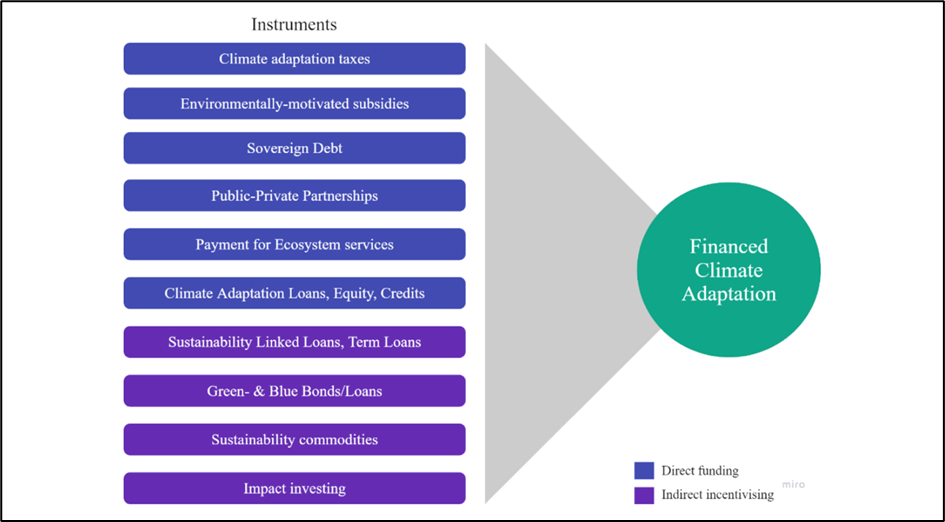
Governments play a crucial role in climate adaptation finance through direct funding and indirect incentives. They use various tools such as climate adaptation taxes, environmental subsidies, sovereign debt, public-private partnerships, and sustainability-linked loans to achieve their climate adaptation goals (see flow chart below). Governments are uniquely positioned to implement control mechanisms and drive large-scale adaptation projects.
Banks are major sources of funding for climate adaptation projects, though they have yet to fully integrate climate risks into their financial risk management. Recent extreme weather events (e.g., floods in Slovenia) have increased awareness of these risks, prompting some banks to adopt initiatives and standards for responsible investments. However, the overall adoption remains slow.

Insurance companies face significant risks from climate change and are beginning to incorporate climate adaptation into their business strategies. They recognize the need to protect natural ecosystems and align financial flows with the Global Biodiversity Framework. Insurers are mobilizing financial resources for sustainability projects and promoting greater transparency in environmental impact disclosures.

Investment funds, particularly pension funds, show a growing awareness of the need to invest in natural capital. However, challenges such as lack of proven track records, insufficient data, and limited understanding of sustainable finance hinder greater investments in climate adaptation projects. Funds typically prioritize financial returns but are open to long-term investments under the right conditions.

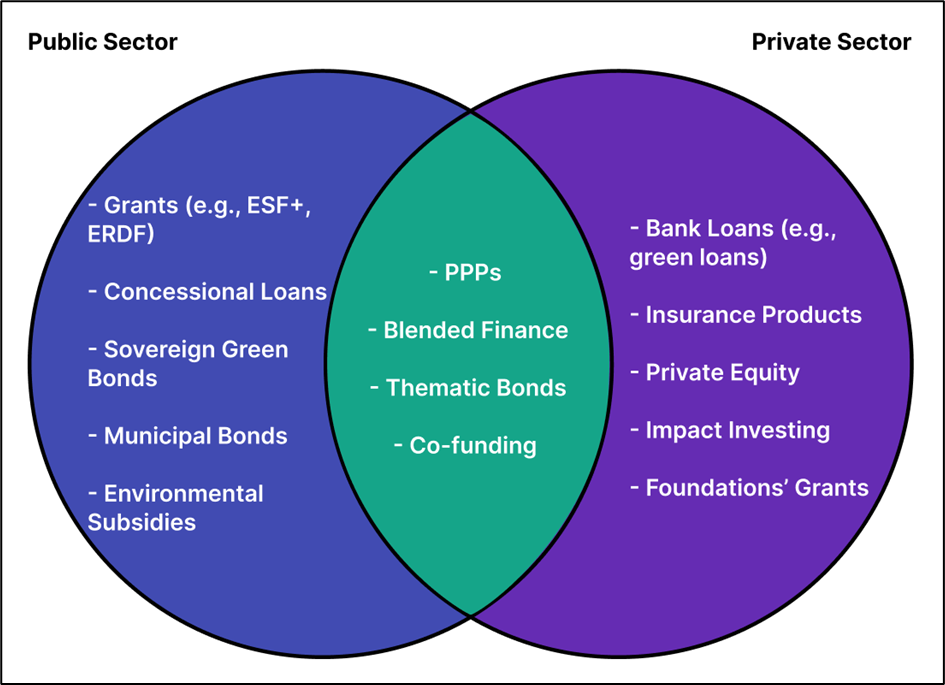
Increased private sector involvement in climate adaptation finance is urgently needed in the face of intensifying climate change impact. Currently, Spain, Portugal, Slovenia, and the Czech Republic are severely lacking climate adaptation projects. Key barriers include risk perception by the investors, lack of clear business models of the projects, and insufficient data on investment outcomes, which in turn deter private-sector involvement across the board. The Venn diagram below illustrates the various financial instruments used by both sectors, as well as those that require collaboration.
Recommendations

To address challenges and enhance private sector engagement, we recommend the following actions for the EU Horizon CLIMATEFIT Project:

  • Establishing a central knowledge platform: Organize and curate up-to-date information on climate impacts, adaptation strategies, and case studies to enhance industry awareness.
  • Assisting governments in leveraging existing tools: Advocate for regulatory changes that incentivize private sector investments and work closely with governments to utilize available tools effectively.
  • Develop standardized metrics: Create metrics for measuring adaptation project impacts, including climate resilience, economic returns, and social equity, to help investors build robust business cases.
  • Foster stakeholder collaboration: Engage stakeholders through networking events, best practice sharing, and collaborative projects to enhance private sector participation in climate adaptation finance.

Both public and private sectors play a critical role in driving climate adaptation finance. By enhancing knowledge sharing, leveraging existing tools, and fostering collaboration, significant progress can be made in mobilizing the necessary investments for a resilient and sustainable future. The EU Horizon CLIMATEFIT project is well-positioned to lead these efforts, bridging the gap between public authorities and private investors to achieve meaningful climate adaptation outcomes.

About the Authors:

Fabian Neiger is a recent graduate of the CEMS MiM program from Copenhagen Business School and Esade Business and Law School, as well as a graduate of the Msc Innovation and Entrepreneurship from Esade Business and Law School. His interest in sustainability and finding innovative solutions for a fairer world drives his passion for ESG research and the implementation thereof.

Ramon Zehnder is a graduate candidate of the MA in Management, Organizational Studies and Culture from the University of St. Gallen. He is especially interested in the complex interplay between private and public organizations in Sustainability and currently researching on CSR in professional sports organizations.

Marcus Alexander Strange Hansen is a graduate candidate at the Technical University of Denmark studying a Msc in Industrial Engineering and Management. He is interested in renewable energies and providing cities and households with green electricity, working part-time at TotalEnergies as a Business Developer focussing on renewables.

Miriam Khader is graduate candidate at the Technical University of Denmark studying a Msc in Transport and Logistics. She is driven by sustainability and civil engineering projects, looking to help shape the world to be liveable for all.

Johanna Franz is graduate candidate at the Technical University of Denmark studying a Msc in Industrial Engineering and Management. She is fascinated in finding solutions to make production more sustainable by not only optimising the processes, but also looking at the individual steps and discovering, where to improve on material choice and energy consumption.

Prof. Kristjan Jespersen is an Associate Professor in Sustainable Innovation and Entrepreneurship at the Copenhagen Business School (CBS). Kristjan is an Associate Professor at the Copenhagen Business School (CBS). As a primary area of focus, he studies the growing development and management of Ecosystem Services in developing countries. Within the field, Kristjan focuses his attention on the institutional legitimacy of such initiatives and the overall compensation tools used to ensure compliance. He has a background in International Relations and Economics.
Corporate Approaches to Double Materiality: Implications for the Corporate Sustainability Reporting Directive as a Compliance or Change Mechanism 

kj.msc@cbs.dk · 24/06/2024 ·

By Sofie Nellemann, Anders Raabjerg Møller and Prof. Kristjan Jespersen

The Corporate Sustainability Reporting Directive (CSRD) is revolutionising corporate reporting traditions. Consequently, an integrated understanding of financial and societal matters needs to be developed. The concept of double materiality represents this integration, as material sustainability topics are depicted based on a company’s impacts on people and the planet, and vice versa, correlating risks and opportunities for a company’s value creation. A Double Materiality Analysis (DMA) has been incorporated as the foundational exercise for the CSRD, with potential strategic benefits for companies. Attempts have been made to provide a method for how companies should conduct the DMA by the European Financial Reporting Advisory Group. Yet, substantial uncertainty about the process and its implications prevails. This research contributes to reducing uncertainty in a relatively under-explored research field by posing the question: ‘How does the availability of resources and institutional frameworks influence corporate approaches to the DMA, and what are the implications for the CSRD as either a compliance mechanism or a driver of strategic transformation within corporations?’
The research builds upon 18 semi-structured interviews with DMA experts and practitioners. This solid data foundation enables exploration of the myriad of dilemmas within impacts on both process efficiency and strategic implications posed by DMA. The findings were analysed using neo-institutional and resource-based theories to determine which factors most effectively support the DMA.

Factors Influencing Efficiency and Strategic Use of DMA

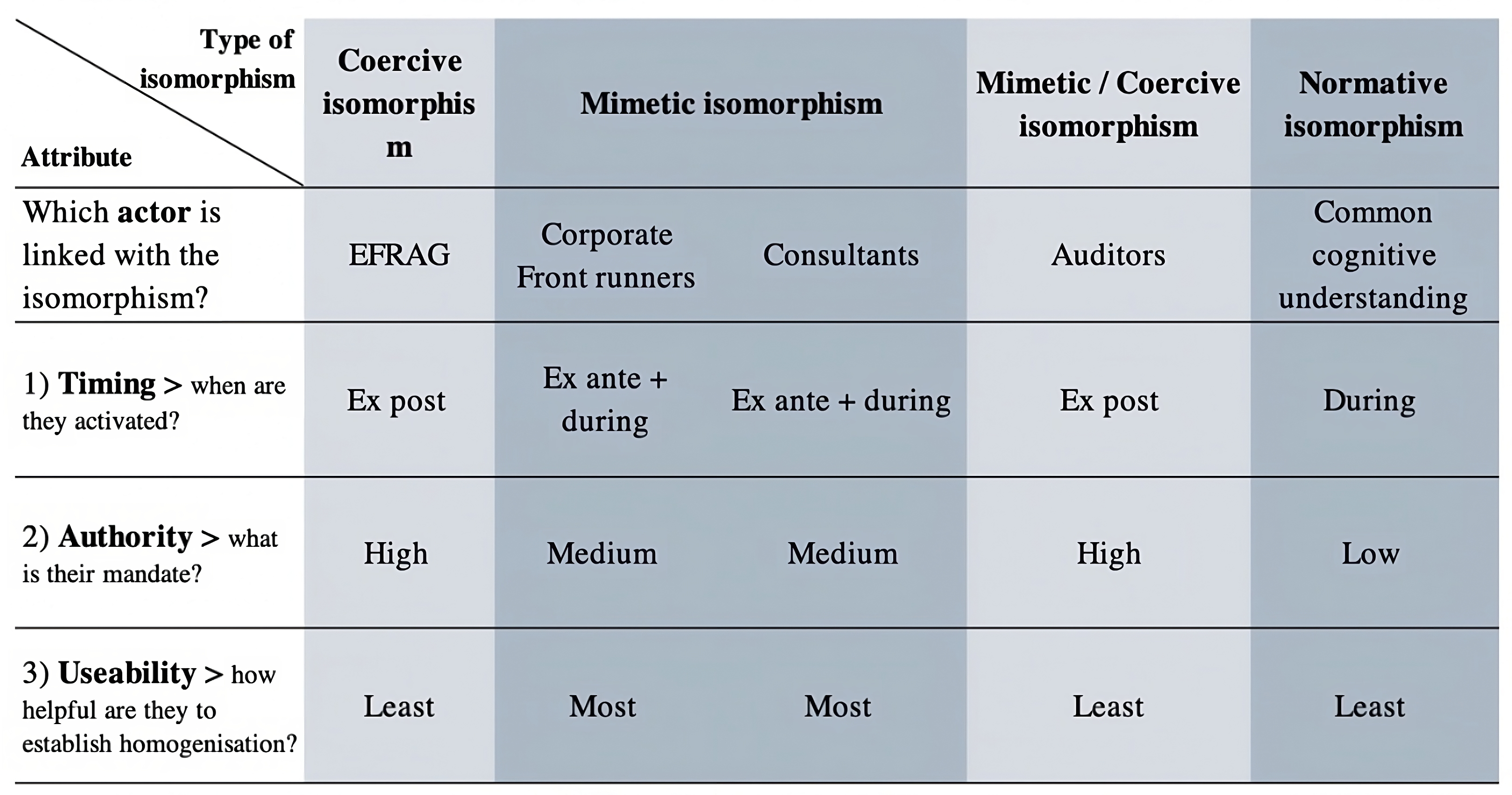
The first output of the research outlines factors impacting the efficient undertaking of the DMA process. The development of human capital in the form of employee knowledge at both a general organisational level, general DMA level, and firm-specific level are important to ensure efficiency. Another influential factor was found to be the development of organisational capital i.e. clear tasks, roles, and responsibilities as well as support from top management. By ensuring that these capitals are well-developed and mature, companies will optimize the DMA process, and thus increase the potential for strategic transformation. Conversely, the research also found that isomorphic developments, in particular mimetic isomorphism, are less impactful for homogenisation and efficiency optimisation. This is due to best practices being underdeveloped for such a novel process as the DMA. Table 1 summarises types of isomorphisms.

Table 1: Summarising Isomorphisms (Authors’ creation)

The second output of the research linked companies’ perceptions of the DMA as well as the uncovering of material topics with the ability to utilise the entire DMA exercise for strategic transformation. Companies must incorporate three aspects upon completion of the DMA to achieve strategic transformation. These include being compliant with the CSRD and deliberately incorporating the DMA outcomes into the sustainability strategy as well as subsequently the corporate strategy. Furthermore, it was outlined that if companies perceive undertaking the CSRD and DMA as a way to gain moral legitimacy and adhere to the informal pressures of the sustainability regime, strategic incorporation is more likely to occur. Conversely, if companies focus only on instrumental value creation and formal legislative pressures rather than doing the right thing, the DMA will not move beyond mere compliance.  

Practical Implications and Conclusion 

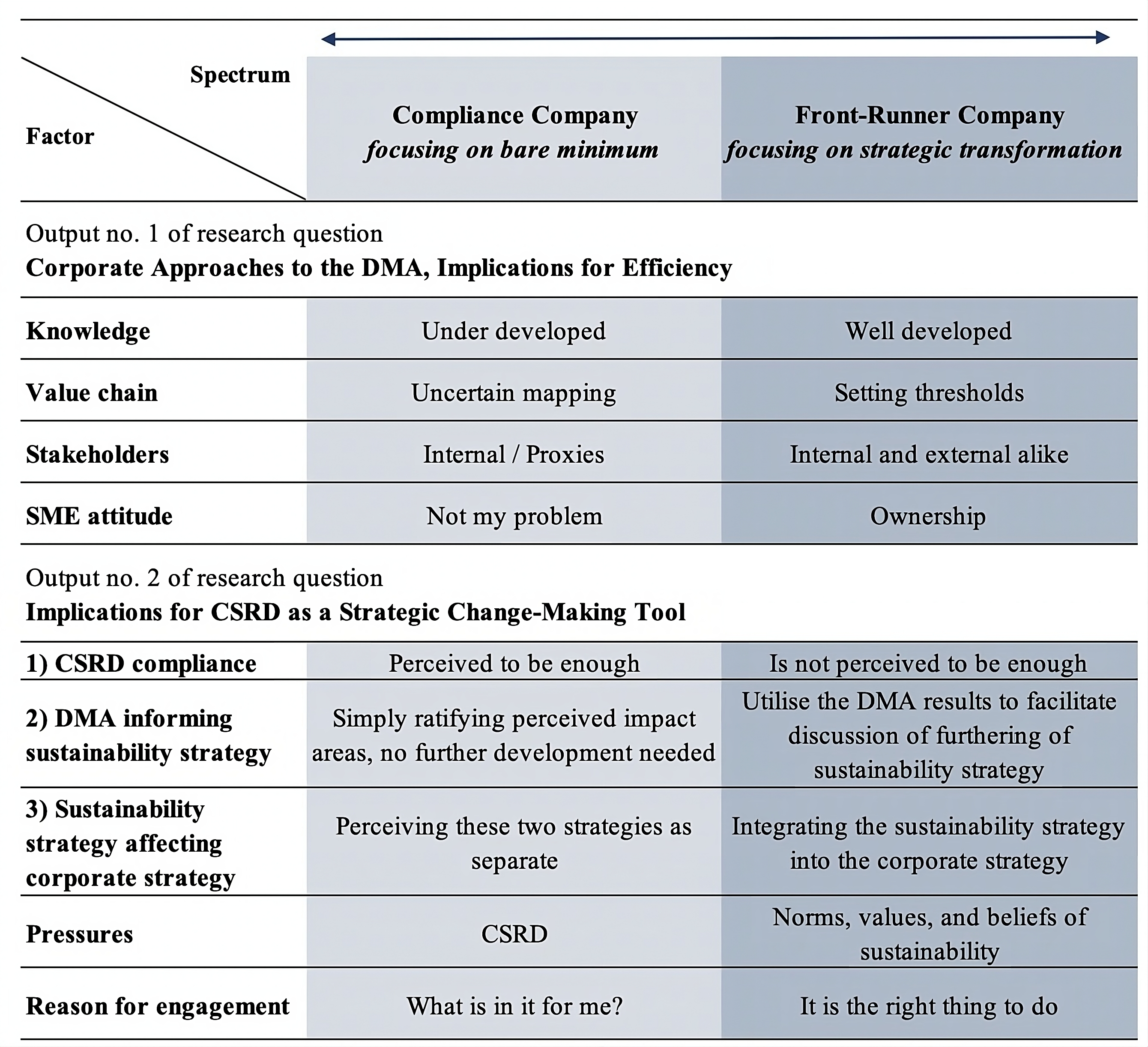
The implications for practitioners are that the key to unlocking the DMA’s strategic transformation potential requires a vast amount of resources and deliberations. On the one hand, companies striving to be front runners in the sustainability space need both ambitions and resources to develop the necessary factors to strategically utilise the DMA. On the other hand, companies might be satisfied with the bare minimum compliance level, and will not be obliged to invest the same amount of resources. Yet, these compliance companies will also fail to unlock the extensive strategic potential of the DMA.

Table 2: The Compliance – Front-Runner Continuum (Authors’ creation)

In conclusion, this research contributes to both practical and theoretical fields by highlighting the resources and frameworks necessary for effective DMA implementation and its strategic potential. It also enhances theoretical understanding by expanding isomorphic analysis and adding norms to the VRIO (Value, Rarity, Imitability, and Organization) framework, emphasising the role of informal institutions in achieving sustained competitive advantage. The introduction of the CSRD and DMA points towards a broader corporate responsibility towards society, beyond mere business interests. 

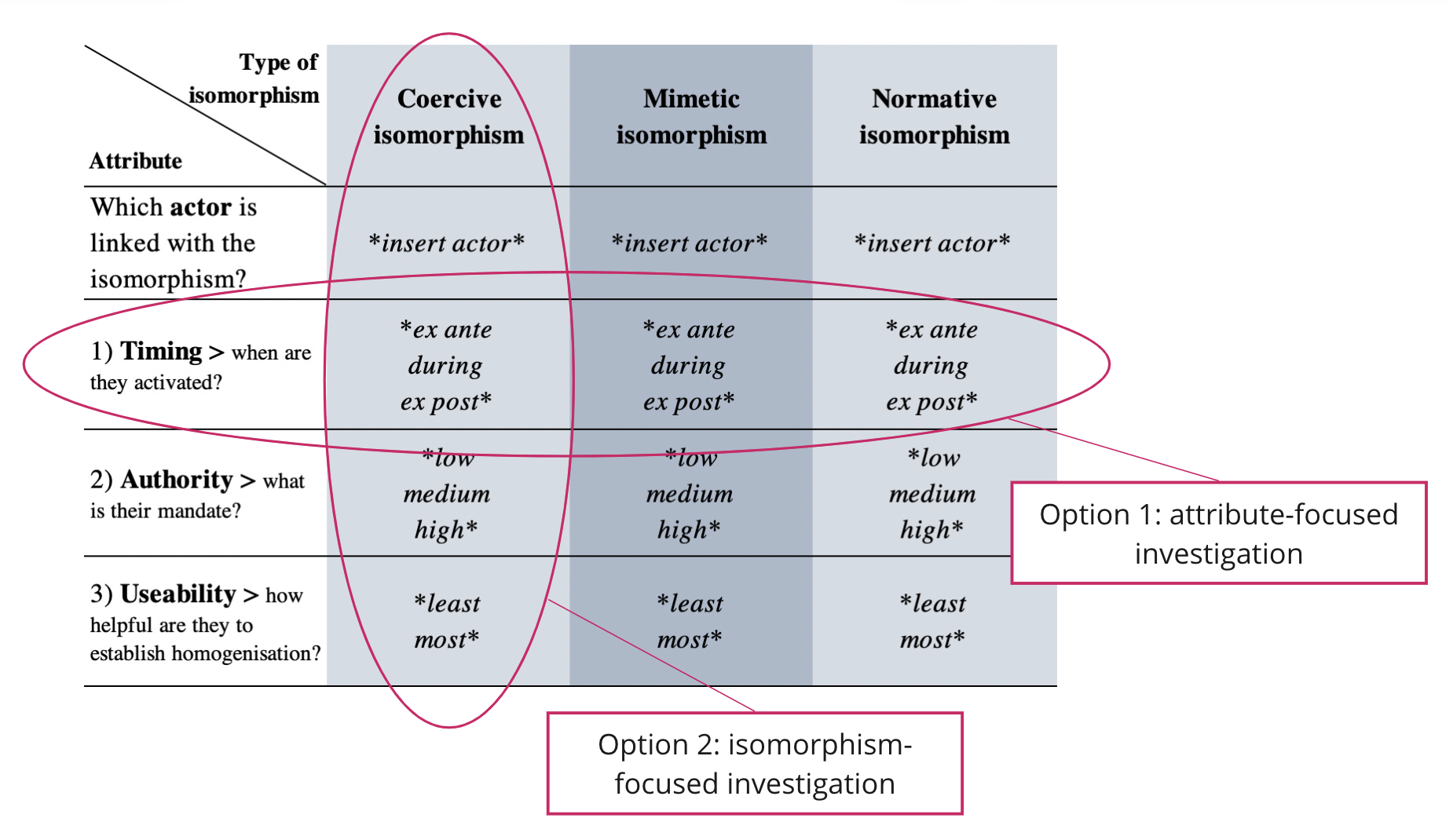
Table 3: The Two Approaches for Investigating Isomorphisms. (Authors’ creation)

About the Authors:

Sofie Nellemann is a recent graduate from Copenhagen Business School and the study programme MSc in Business, Language and Culture – Business and Development Studies. With a minor in ESG and throughout her degree, her research interests have developed in the intersection between strategy development and corporate sustainability. Sofie Nellemann is currently employed as a sustainability consultant at the consulting firm, Hansen & Ersbøll Agenda. 

Anders Raabjerg Møller holds a completed Masters degree as MSc in Business Administration and Philosophy from the Copenhagen Business School. His research interests involve the incorporation and implementation of sustainable business practices in a contemporary corporate world. Combined with a minor in ESG he has honed his skills within problem-solving, analytical skills, and strategy in complex corporate context. Anders is employed as an ESG Data Specialist at Link Logistics A/S.

Prof. Kristjan Jespersen is an Associate Professor in Sustainable Innovation and Entrepreneurship at the Copenhagen Business School (CBS). Kristjan is an Associate Professor at the Copenhagen Business School (CBS). As a primary area of focus, he studies the growing development and management of Ecosystem Services in developing countries. Within the field, Kristjan focuses his attention on the institutional legitimacy of such initiatives and the overall compensation tools used to ensure compliance. He has a background in International Relations and Economics.
Innovation AlliancE for Training prograMMes for Deforestation-Free Supply Chains in Europe – EMMA4EU

kj.msc@cbs.dk · 13/11/2023 ·


By Kristjan Jespersen and Kedar Uttam


Leading the fight against deforestation

Funded by European Commission’s Erasmus+ Programme

A concerning trend has emerged as various forests worldwide face severe deforestation to make way for the expansion of agricultural activities intended for the production of  specific commodities like palm oil, soy, beef, and coffee. These commodities, aptly termed forest risk commodities (FRCs), bear this nomenclature due to the inherent risk they pose to the very ecosystems and climate upon which we depend.  They pose a risk to the forests and the climate. Notably, the European Union (EU) stands as one of the primary consumers of FRCs, with its demand intricately linked to a staggering 16% of the global deforestation – an area almost the size of Luxemburg. Therefore, the EU needs to ensure that the FRCs it imports are not causing harm to the environment and the people who depend on it. This is not an easy task, because deforestation is often considered to be a forestry problem without acknowledging its connection to the way we grow food, trade goods, and consume products, all along the supply chains that bring them to us. Deforestation is rather a complex problem that involves many different factors, such as agriculture, trade, consumption, and governance. This complexity should also be reflected in the education and training programmes, offered by universities and vocational schools. Thus, students and professionals must be equipped with the knowledge and skills necessary to traverse these diverse domains, bridging the chasms between sectors and fundamental disciplines, including compliance, technology, and corporate social responsibility. These proficiencies are pivotal in paving the way for the creation of deforestation-free supply chains (DFSCs). Most collective commitments by both private and public entities to achieve DFSC have proven ineffective in reversing the trend. Consequently, the European Commission (EC) has recently given its approval to the EU Deforestation Regulation (EUDR), which aims to prohibit the import of FRCs) originating from land deforested after 2020. Given these circumstances, there is a clear need for innovative approaches in the realms of education, training, and capacity development aimed at mitigating deforestation risks within the supply chains of FRCs in the EU.

The pressing need to address deforestation is at the forefront of our collective consciousness, and it is this very need that drives the mission of EMMA4EU. This visionary project seeks to combat deforestation by creating an EU alliance of universities, vocational schools, businesses, public organisations and NGOs, to develop innovative training solutions for a new profession: the deforestation-free supply chain (DFSC) manager. Armed with a specialized skillset of comprehensive knowledge, the DFSC manager will possess the skillset and knowledge to ensure that the FRCs imported by the EU are produced in a sustainable way, without causing deforestation or violating human rights. The DFSC manager will also be able to use digital and green technologies to improve the efficiency and transparency of the supply chains, and to comply with the EUDR. Through the creation of this innovative profession, EMMA4EU will catalyze the transition toward a greener and more circular economy, facilitating the EU’s journey to meet its climate targets and attain climate neutrality by the pivotal year 2050.

The Copenhagen Business School (CBS) actively engages as a part of the EMMA4EU consortium, which consists of 11 partners from different countries and sectors. Our core role within this visionary initiative encompasses the assessment of training and implementation activities, as well as the critical management of process-oriented activities, including project oversight, dissemination, and communication. By diligently gathering and scrutinizing data from our fellow partners, we remain poised to offer crucial feedback and interventions to ensure the project adheres to its work plan and schedule. In tandem with our consortium counterparts, we contribute to the development of a comprehensive research and assessment framework, involving an exhaustive review of the prevailing scientific literature and knowledge related to impact assessment and Environmental, Social, and Governance (ESG) dimensions, encompassing metrics and biodiversity-related financial risks within the realm of Deforestation-Free Supply Chains (DFSCs). Additionally, we play an integral role in enhancing the training materials by constructing teaching cases centered on the intricate issue of deforestation. In a collaborative effort with the University of Freiburg, we are committed to crafting an EU innovation report that delves into the myriad factors influencing the efficacy, or lack thereof, in DFSC regulation, including the exploration of business models and associated tools. Through these multifaceted endeavors, CBS and its consortium partners are firmly committed to advancing sustainable and ecologically sound practices, aligning with the broader mission of ecological economics.

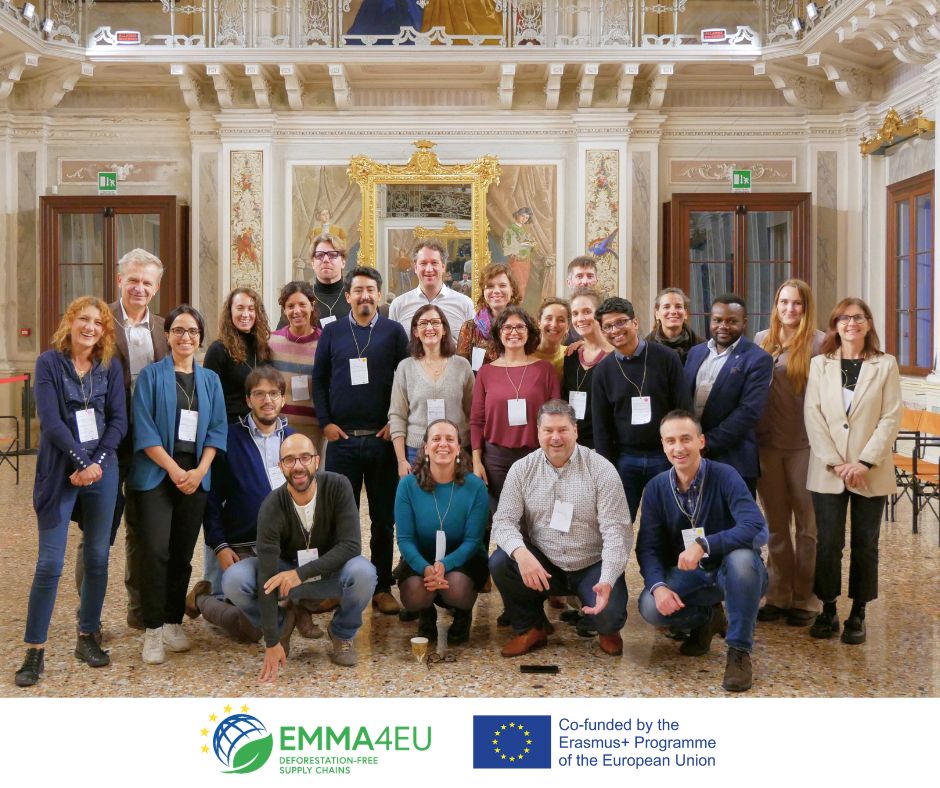
Photo Caption: First in-person EMMA4EU partners’ meeting at Villa Parlo Bolasco in Castelfranco Veneto, Italy held between 2 and 3rd November 2023. 

Kedar Uttam is a postdoc at CBS, Kedar analyzes the integration of environmental, social, and governance (ESG) factors in ocean financing and the role of institutional work in marine conservation finance. Additionally, Kedar is actively engaged in developing business cases for the ocean economy and ESG curricula. He has a background in Environmental Engineering and PhD with specialization in Environmental Management and Assessment.

Prof. Kristjan Jespersen is an Associate Professor in Sustainable Innovation and Entrepreneurship at the Copenhagen Business School (CBS). Kristjan is an Associate Professor at the Copenhagen Business School (CBS). As a primary area of focus, he studies the growing development and management of Ecosystem Services in developing countries. Within the field, Kristjan focuses his attention on the institutional legitimacy of such initiatives and the overall compensation tools used to ensure compliance. He has a background in International Relations and Economics.
Making Waves in ESG Investing: An Assessment of the Performance of Ocean Investment Portfolios

kj.msc@cbs.dk · 15/09/2023 ·

By Antonia Föger, Sebastian Rottensten Wieghorst and Prof. Kristjan Jespersen

Our world’s oceans cover more than 70% of the Earth’s surface and represent one of its most critical ecosystems. They absorb around 90% of global excess heat, provide food and employment for millions of people worldwide and create economic value that is comparable to the world’s seventh largest economy. Recognizing the importance of oceans for the environment, society, and the economy, it is surprising that investments in sustainable ocean initiatives, often termed ‘blue finance,’ lag behind land-based counterparts. SDG 14, focusing on ocean-related sustainability goals, receives the least public funding among all Sustainable Development Goals. Additionally, in the realm of ESG investing, oceans are yet to receive the attention they deserve.

This imbalance can be attributed to several barriers in ocean investment. A significant issue is the lack of relevant ESG data and ‘blue metrics’ for evaluating the impact and risk of ocean-related investments. Currently, ESG data providers do not offer sufficient ocean-focused scores and indicators, hindering the assessment of a company’s conduct in terms of ocean health, including marine pollution, overfishing, or operations in marine protected areas. Moreover, private and institutional investors often perceive ocean-positive investments as riskier and lack viable investment frameworks.

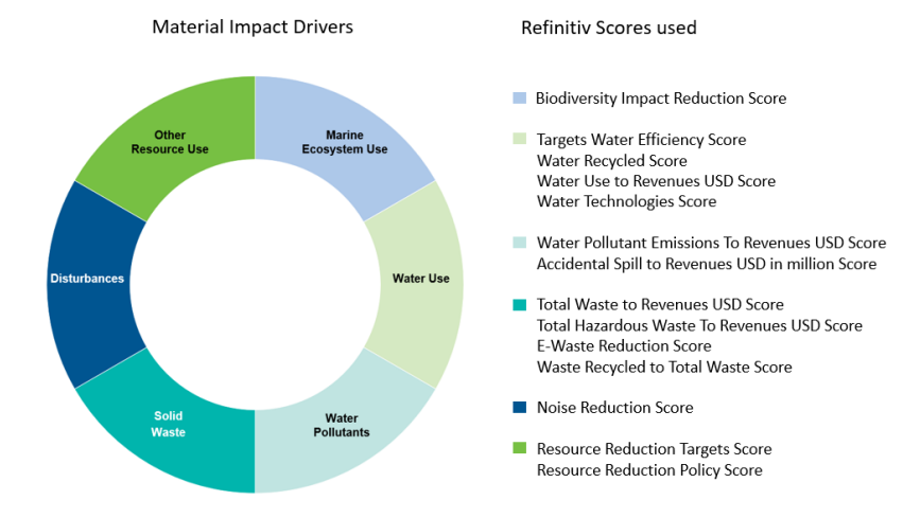
To address these gaps, our Master’s Thesis, supervised by Kristjan Jespersen, conducted a study analyzing the performance of three self-constructed ocean sustainable public equity portfolios using various ESG investment strategies. We tackled the lack of ocean-specific sustainability data by creating our own Ocean Impact Score (OIS). We assessed natural impact drivers for each GICS sub-industry, aligned with the TNFD framework, and overlay this with industry assessment using the ENCORE tool. We then matched these material ocean impact drivers with available environmental scores at Refinitiv to create the OIS.

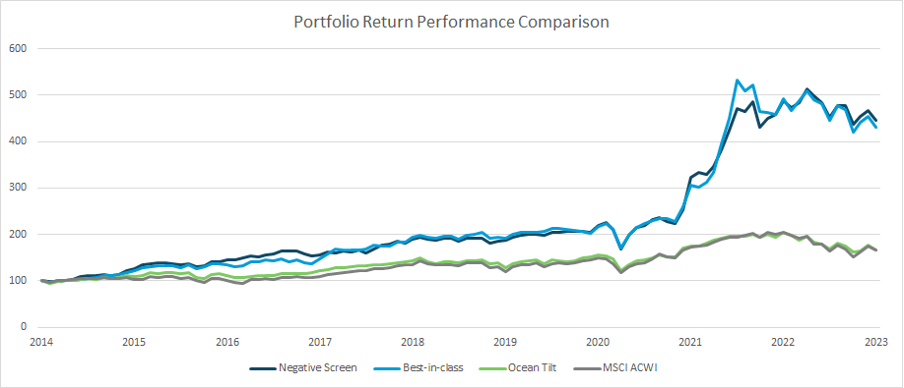
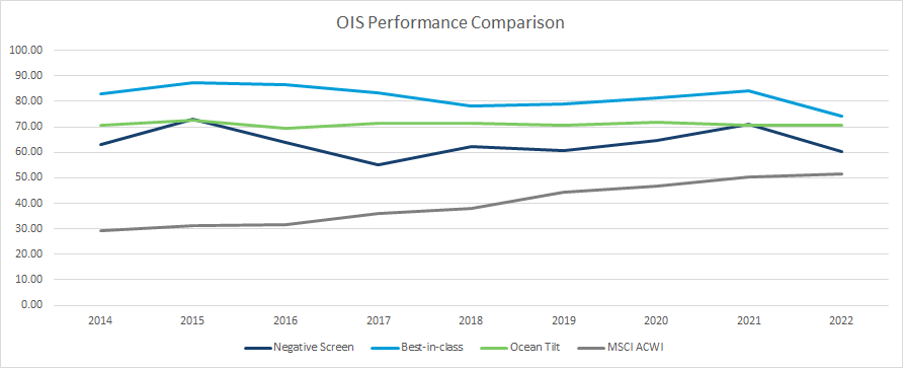
Our study evaluated the financial and OIS performance of these portfolios compared to the market. We explored three ESG investment strategies commonly used: negative screening, best-in-class, and ocean tilt. These strategies demonstrate how to integrate OIS data, along with their benefits and potential pitfalls, while comparing them to the MSCI All Countries World Index (MSCI ACWI).

Our results indicate that investors can enhance the ocean sustainability of their portfolio without sacrificing risk-adjusted financial performance. All three ocean portfolios consistently outperformed the benchmark in terms of OIS performance, with the negative screened and best-in-class portfolios showing superior financial performance in seven out of nine analyzed years. We also identified small but significant alpha values of 1.1% and 1.0% in the two portfolios, suggesting that screening companies based on ocean impact performance can yield positive abnormal returns compared to the MSCI ACWI. While our study does not establish a direct causal link between ocean sustainability and financial performance, it demonstrates that integrating ocean sustainability in investment decisions does not necessarily result in lower returns.

An interesting observation is that none of the three ocean portfolios showed improvement in their Ocean Impact Score over time, while the benchmark consistently improved year after year. This raises questions about what ESG score improvement actually measures. The limited ESG disclosure available suggests that the OIS score’s improvement might result from better disclosure practices rather than actual improvements in ocean-related environmental performance. Consequently, companies with high-quality environmental disclosure in the early years tend to maintain their OIS scores without significant changes. Therefore, the overall market improvement is likely driven by advancements in disclosure practices.

Our study’s results demonstrate that investors can already reduce the negative ocean impact of their portfolios while maintaining similar or even slightly higher risk-adjusted financial performance. Additionally, assessing the ocean impact of portfolios enables investors to engage actively with companies lagging behind in environmental performance.

About the authors

Antonia Föger is a recent graduate of MSc in Finance and Strategic Management (Cand. Merc.) from Copenhagen Business School. Her focus during her master’s thesis has been on sustainable finance, reflecting her enthusiasm for integrating environmental and social considerations into investment decisions and the associated challenges.

Sebastian Rottensten Wieghorst is a recent graduate of MSc in Finance and Strategic Management (Cand. Merc.) from Copenhagen Business School. His interest in the overlap between asset management and sustainability motivated him to contribute to unexplored facets within the field of ESG investing.

Prof. Kristjan Jespersen is an Associate Professor in Sustainable Innovation and Entrepreneurship at the Copenhagen Business School (CBS). Kristjan is an Associate Professor at the Copenhagen Business School (CBS). As a primary area of focus, he studies the growing development and management of Ecosystem Services in developing countries. Within the field, Kristjan focuses his attention on the institutional legitimacy of such initiatives and the overall compensation tools used to ensure compliance. He has a background in International Relations and Economics.
Exploring ESG Data: The Biodiversity Dilemma in Sustainable Investing

kj.msc@cbs.dk · 06/09/2023 ·

By Antonia Föger and Prof. Kristjan Jespersen

As our world economy continues its rapid growth, a new crisis emerges on the horizon – the alarming decline of biodiversity. Over the next couple of decades, a quarter of existing animal and plant species face the threat of extinction. The consequences of this significant biodiversity loss would not only entail profound ecological ramifications but also bring along unprecedented levels of economic risks. The World Economic Forum (2020) has revealed that more than 50% of the global GDP is moderately to heavily dependent on the balance and intactness of nature itself. 

It is therefore no wonder that governments, investors, and other actors in the financial market are increasingly concerned about their assets’ exposure to biodiversity-related risks. Despite this newfound willingness to incorporate biodiversity issues into investment decisions and portfolio management processes, assessing biodiversity-related risks and opportunities poses a substantial challenge in itself. 

As part of a case study on biodiversity risk for one of Denmark’s largest pension funds, we investigated the biodiversity-related regulatory and data landscape in the example of the mining industry, identifying data gaps and trying to form a feasible framework for biodiversity risk assessment. Here are the key steps that we took:

  1. Mapping Material Metrics: As an initial step, the TNFD’s risk management and disclosure framework supplemented by the Encore materiality assessment tool were used to map out the material metric categories for biodiversity-related risk. 
  2. Reviewing Regulatory Landscape: We then reviewed ESG regulations and standards to profile the overall regulatory landscape for reporting on biodiversity risk. These included mandatory standards such as the SFDR (PAIs) and ESRS (CSRD) as well as voluntary reporting frameworks including TNFD, GRI, CDSP, and SASB. This resulted in a comprehensive collection of six indicator categories and 17 specific indicators that would enable investors to make fully informed investment decisions in terms of companies’ biodiversity risk and impact. 
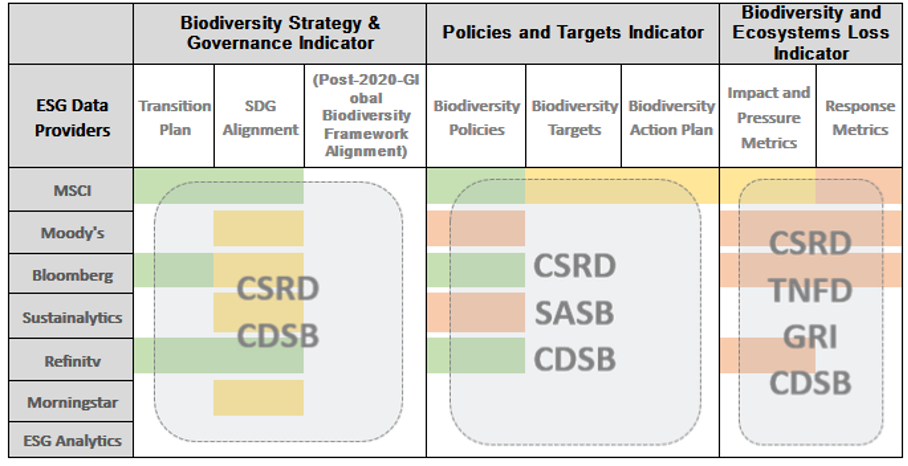
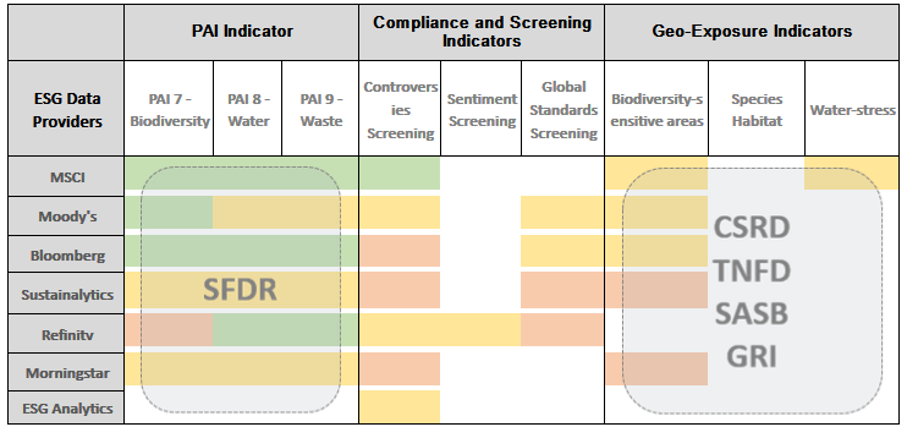
  3. Assessing ESG Data Providers: Finally, we reached out to and analyzed nine different ESG data providers to understand the availability of the identified biodiversity indicators. The results are shown in the below Data Provider and Key Biodiversity Indicator Map. 

Our findings clearly indicate that there currently exists a significant gap in the available biodiversity data by ESG data providers. Probably the most critical and, at the same time, most underdeveloped indicators are those on biodiversity geo-exposure. While there is mediocre availability of geolocated exposure to biodiversity-sensitive areas that are mainly linked to the principal adverse impact (PAI) indicator no. 7 on biodiversity, granular asset level data to fully understand the extent of exposure is missing. Additionally, the available data does not link to legally protected or recognized areas and provides no information on exposure to the intactness of an ecosystem. Moreover, impact and pressure as well as response metrics are only limitedly available, making it difficult to quantify a company’s actual impact on biodiversity.

Alternative third-party datasets, such as IUCN Red List of Threatened Species and WWF Water Risk Filter, can play an important role in understanding biodiversity risks, especially in the context of location and asset level metrics. At the moment, however, these types of datasets are not yet integrated by ESG rating agencies, therefore requiring an increased amount of effort in collecting data from them. 

While the current data landscape may not enable investors to fully grasp and evaluate biodiversity risks and company performance, significant changes are on the horizon. Biodiversity is steadily becoming a central theme in sustainability discussions, leading to increased demand for thematic financial products. Additionally, the introduction of mandatory reporting requirements is expected to prompt companies to enhance their disclosure quality. Future developments such as Science-Based Targets for Nature (SBTN), common nature-related targets through COP 15, and EU Taxonomy minimum safeguards may contribute to a deeper understanding of impacts and financial risks. Additionally, investors can use current, imperfect scoring systems to identify biodiversity laggards or firms with inadequate disclosures and engage in constructive dialogue with them to drive best practices and better environmental outcomes

In conclusion, as the world grapples with the critical issue of biodiversity loss, the financial industry is taking steps to address these challenges. While there are substantial data gaps and hurdles to overcome, the growing recognition of biodiversity risks and the evolving regulatory landscape are driving positive changes. As biodiversity and the intactness of natural ecosystems move to the forefront of global concerns, investors are poised to play a pivotal role in integrating nature-related risks and opportunities in the investment decision process. 

About the Authors:

Antonia Föger is a recent graduate of MSc in Finance and Strategic Management (Cand. Merc.) from Copenhagen Business School. Her focus during her master’s thesis has been on sustainable finance, reflecting her enthusiasm for integrating environmental and social considerations into investment decisions and the associated challenges.

Prof. Kristjan Jespersen is an Associate Professor in Sustainable Innovation and Entrepreneurship at the Copenhagen Business School (CBS). Kristjan is an Associate Professor at the Copenhagen Business School (CBS). As a primary area of focus, he studies the growing development and management of Ecosystem Services in developing countries. Within the field, Kristjan focuses his attention on the institutional legitimacy of such initiatives and the overall compensation tools used to ensure compliance. He has a background in International Relations and Economics.
  • « Go to Previous Page
  • Page 1
  • Page 2
  • Page 3
  • Page 4
  • Page 5
  • Page 6
  • Go to Next Page »

Copyright © 2025 · Copenhagen Business School

  • Accessibility Statement
  • Privacy Policy
  • Cookies