• Skip to primary navigation
  • Skip to main content

← cbs.dk

CBS logo

nordicesglab

  • Blog
  • Research & Resources
    • Governing Nordic ESG
      • EXECUTIVE REMUNERATION AMONG DANISH C25 COMPANIES
    • Blue Nordic ESG
      • Wind Energy and Marine Ecosystems
      • Building on Evolving Standards to Develop Robust Ocean-Related Metrics
    • Green Nordic ESG
  • Teaching
  • Events
  • About Us
  • Contact
  • Show Search
Hide Search

Uncategorized

A Roadmap through the Jungle: How can institutional investors address deforestation risk?

kj.msc@cbs.dk · 17/07/2023 ·

By Paul Wieshammer, Brunello Olivero, Simone Tansini and Prof. Kristjan Jespersen

Recent macroeconomic trends have shown a shift requiring companies, organizations, and investors to be increasingly aware of environmental, social, and governance (ESG) issues such as climate change, biodiversity loss, deforestation, and gender equality (Serafeim, 2014). In addition, the consolidation of stakeholder theory also prompts companies to focus on more sustainable practices (Freeman, 2010). This shift does not only impact firms down the supply chain but also financial institutions. As a result, investors are increasingly focusing on non-financial factors when allocating assets.

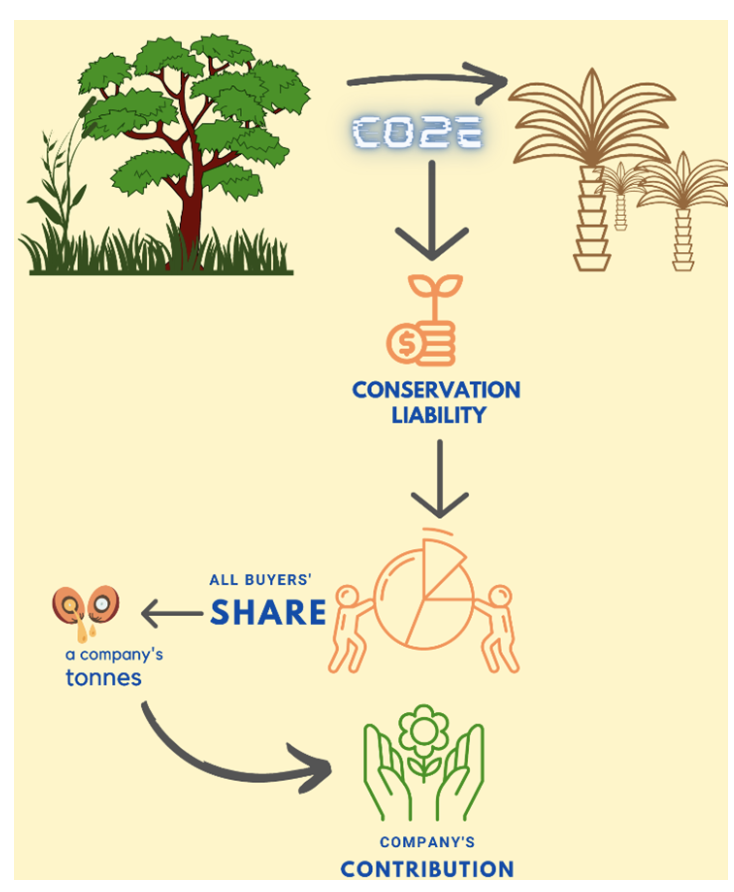
For example, the world’s green lung, the Amazon rainforest in Brazil, emits more CO2 than it absorbs (Qin et al., 2021). The primary cause of this issue is clearing land to produce commodities like palm oil, soy, and beef. While protecting rainforests has economic benefits for everyone, it comes at a cost to countries that would have to sacrifice their economic development. This global issue requires efforts from both producing and importing countries.

Institutional investors have started to address this commodity-driven forest risk. They distinguish between reputational, operational, market, and regulatory risks. Many are committing to (net-) zero deforestation to mitigate these risks and are seeking transparency in their supply chain. There are several frameworks and tools in place that can help with this (e.g., Forest 500, Trace). However, there is a lack of information about legal requirements in commodity-producing countries, and when laws do exist, they are often not enforced or ineffective.

When examining the legislative landscape of commodity-producing countries, a notable disparity exists in their approaches to addressing deforestation. This variation is due to the diversity of priorities and political systems across different nations, which is their sovereign prerogative. However, from an investor’s standpoint, this can generate ambiguity and hinder their ability to assess legislation and evaluate deforestation risks comprehensively. Findings from secondary research and interviews show that regulation and country-level problems are not the main drivers behind institutional investors addressing forest risk.

However, when evaluating businesses with commodity risk, adhering to regulations can benefit everyone involved. While it is ideal for companies to go beyond legislative requirements, not all firms are likely to do so. Some may be slower to adopt best practices, while others may lead the way. Nevertheless, regulations can motivate all companies to improve. Additionally, a robust system of legislation encourages ethical conduct and compliance throughout the industry. For example, in 2021, the WWF reported that 94% of deforestation and habitat destruction in Brazil could be illegal. How can investors continue to rely on companies’ reporting when associated illegal deforestation is so widespread?

Therefore, it is necessary to closely examine the risks at the country level that are associated with this issue. The researchers have developed a 3-step solution framework that can be used to interact with companies that are at risk of deforestation:

  1. Identification of countries with deforestation risk
  2. Analysis of present regulations associated with land use and deforestation legislation.
  3. Comparison of local regulations with the current situation and with the ideal scenario of zero deforestation

The third step describes identifying local requirements and their fit gap analysis. Finally, investors must consider the current legislation in a specific country, its shortcomings in achieving net-zero deforestation, and the prevalence of illegal deforestation because legislation will only provide information on what is legal.

By implementing this framework and creating a tool that explains the risks involved in investing in businesses of different countries, investors can more effectively consider country-level risks associated with doing business. Furthermore, it can better identify greenwashing and prevent them from engaging in such practices. In summary, it can provide value through more effective engagement with companies and governments to understand their pain points and promote good practices.

About the authors

Paul Wieshammer is currently pursuing a Master of Science in Management at the University of Mannheim. He is currently focusing his studies on the field of industrial decarbonization. He holds a Minor in ESG from the Copenhagen Business School, and has previously worked as an ESG analyst and a consultant in CSRD and EU Taxonomy related projects.

Brunello Olivero, MiM graduate from IE Business school with a specialization in ESG from Copenhagen Business School. Currently working at Kearney Milan as junior consultant

Simone Tansini, graduate in Business Administration and E-business from Copenhagen Business School. Passionate about the interplay between technology, business, and sustainability.

Prof. Kristjan Jespersen is an Associate Professor in Sustainable Innovation and Entrepreneurship at the Copenhagen Business School (CBS). Kristjan Jespersen is an Associate Professor at the Copenhagen Business School (CBS). As a primary area of focus, he studies the growing development and management of Ecosystem Services in developing countries. Within the field, Kristjan focuses his attention on the institutional legitimacy of such initiatives and the overall compensation tools used to ensure compliance. He has a background in International Relations and Economics.
Navigating Emissions Reporting in the Shipping Industry: An Exploration of Emissions Reporting and Stakeholder Expectations

kj.msc@cbs.dk · 03/07/2023 ·

By Mikkel Holbæk Mørch, Tobias Brunsgaard Børglum, and Prof. Kristjan Jespersen

The shipping industry plays a vital role in global trade, but its environmental impact cannot be ignored. The sector contributes a significant share of greenhouse gas emissions, posing a risk to the objectives of the Paris Agreement. While global measures to reduce emissions in the maritime sector have been slow to materialize, shipping companies are recognizing the need for more ambitious sustainability strategies. This blog post summarizes the key findings of a master’s thesis exploring the role of emissions reporting in the shipping industry, highlighting the risks of non- compliance with stakeholder expectations and the opportunities it presents for shipping companies.

The Growing Importance of Emissions Reporting

Stakeholders across industries are increasingly expecting companies to disclose sustainability information and targets. This reporting allows financial institutions, industry customers, regulators, and other stakeholders to understand and benchmark company performance. The shipping industry has historically been resistant to disclose company-specific data; nevertheless, the industry is now facing rising stakeholder pressures to increase its transparency. However, the academic discourse on emissions reporting in the maritime sector is still limited, with a lack of research concerning emissions reporting’s impact on shipping companies’ modus operandi.

Understanding the Role of Emissions Reporting

To investigate the role of emissions reporting across the shipping industry, an emissions reporting index was compiled, consisting of the 50 largest stock-listed shipping companies globally. The index revealed variations in reporting efforts among shipping companies. Opposing viewpoints are discernible across geographical locations and shipping segments, with Northern European and companies in close proximity to the end consumer being more inclined to disclose emissions. In addition, the study employed interviews with 16 shipping companies and industry stakeholders to explore the varying reporting efforts across the industry and generate insights into stakeholders’ perceptions and expectations of emissions reporting.

Divergent Reporting Expectations

The study found a disparity in emissions reporting expectations among stakeholders. Companies are encouraged to adhere to diverse reporting standards based on their segments and geographical locations. Stakeholders exhibit divergent reporting expectations, ranging from regulatory compliance to the adoption of voluntary emissions reporting standards. However, it is challenging to impose stricter reporting requirements due to inadequate sanctions for non-compliance with stakeholder expectations. For instance, financial institutions are aiming to increase transparency across the shipping industry promoting reporting initiatives, but their effectiveness are arguably restricted as financing options remains available outside the initiatives.

Risks of Non-Compliance with Stakeholder Expectations

Non-compliance with stakeholder expectations exposes shipping companies to financial, reputational, and competitiveness risks, varying across shipping segments and geographical locations. The inadequate sanctions for non-compliance with stakeholder expectations pose a limited immediate risk to shipping companies; however, the materiality of these risks will increase significantly in the future. Neglecting emissions reporting in the short term can have adverse consequences for a company’s future competitiveness, due to risks of being a late adopter of emissions reporting.

Implications and Recommendations

The study’s findings have practical implications for shipping companies and industry stakeholders. Although non-compliance may not result in immediate consequences, companies should not disregard emissions reporting. Disclosing emissions allows companies to control their narrative, develop competencies, and improve long-term competitiveness. The potential benefits of emissions reporting must be weighed against the costs of establishing and maintaining reporting processes. In addition, given the divergent stakeholder expectations, two recommendations are proposed to create a more equitable competitive landscape. Emissions reporting efforts could be increased through a bottom-up approach in which regulatory requirements are increased, forcing stakeholders to raise their expectations. Alternatively, a top-down approach involving collaboration among financial institutions could impose appropriate sanctions on non-compliant shipping companies. This approach requires significantly more global collaboration among financial institutions than what is currently facilitated.

The Future of Emissions Reporting

The paper uncovers that emissions reporting is gradually converging towards a license to operate, as more stakeholders are demanding transparent emissions disclosure and voluntary reporting standards are becoming mandatory. It is argued that emissions reporting will become increasingly similar over time, as shipping companies are urged to adopt similar disclosure practices to maintain legitimacy and competitiveness. It is imperative that shipping companies understand the expectations of their unique stakeholder environment and not merely mimic the reporting practices of industry leaders. Furthermore, the study emphasizes that mandating uniform emissions reporting across the industry may impede companies’ ability to differentiate themselves and restrict their competitive abilities. Therefore, a balanced approach utilizing both mandatory and voluntary frameworks is recommended. Concurrent application of regulations and voluntary reporting standards can incentivize stakeholders to increase expectations without compromising shipping companies’ ability to differentiate themselves.

What’s next?

Emissions reporting in the shipping industry is gaining prominence as stakeholders demand more transparency and accountability. Although challenges exist in meeting divergent stakeholder expectations, shipping companies must recognize the risks and opportunities associated with emissions reporting. By embracing transparency and sustainability, companies can enhance their long-term competitiveness and contribute to a more sustainable maritime sector.

About the authors

Mikkel Holbæk Mørch is a Data Analyst at the product tanker company Hafnia BW. He is currently positioned in the Pool Management department, where his focus is centered on data analysis pertaining to the performance aspects of vessels as well as algorithmic modelling of pool earnings. He recently obtained his master’s degree in International Marketing & Management from Copenhagen Business School (CBS), where his research explored the connection between financial concepts and sustainability, particularly focusing on the shipping industry. Mikkel also holds a bachelor’s degree in Shipping and Trade from CBS.

Tobias Brunsgaard Børglum is an Investment Analyst at the alternative investment fund, Navigare Capital Partners, specializing in investment analysis and financial modeling of maritime investments. He recently obtained his master’s degree in Finance & Investments from Copenhagen Business School (CBS), where his research explored the connection between financial concepts and sustainability, particularly focusing on the shipping industry. Tobias also holds a bachelor’s degree in Shipping and Trade from CBS.

Prof. Kristjan Jespersen is an Associate Professor in Sustainable Innovation and Entrepreneurship at the Copenhagen Business School (CBS). Kristjan Jespersen is an Associate Professor at the Copenhagen Business School (CBS). As a primary area of focus, he studies the growing development and management of Ecosystem Services in developing countries. Within the field, Kristjan focuses his attention on the institutional legitimacy of such initiatives and the overall compensation tools used to ensure compliance. He has a background in International Relations and Economics.
How can asset managers ensure “secure” investments through documentation and transparency, based on due-diligence in relation to Indigenous People?

kj.msc@cbs.dk · 23/06/2023 ·

By Anna Le, Anne Sophie Rex, Elena Wilken Damm, Heng Zhang & Prof. Kristjan Jespersen

Main challenge

In the past, some asset managers stated they care about sustainability and human rights, but in practice, they rarely engaged on environmental, social, and governance (ESG) issues. However, this perception is outdated (Eccles & Klimenko, 2019). Eccles and Klimenko (2019), in a study of 70 senior executives at 43 global investing firms, argue that ESG is a main priority for investment managers, which means corporate leaders will soon take the responsibility of ESG performance requested by shareholders, if they did not do so already.

Corporate sustainability due-diligence (European Commission, 2022) and ESG reporting requirements (IFRS, 2022) are in the pipeline, which generates a new challenge for asset managers and for corporate executives — are they ready for the new trend? The answer is obvious: most asset managers and corporate executives are not ready for the new change, as they do not have relevant experience and expertise to avoid risk exposure of violations Indigenous People (IP) rights. For instance, two of the three largest investment firms in the world — BlackRock and Vanguard — are all involved in violations of the rights of the IP because of their portfolios (Butler, Allam & Wahlquist, 2020). Another example is the resignation of Rio Tinto’s CEO and senior executives after the Juukan Gorge violation. The violations of the rights of IP also have direct financial losses – two Norwegian wind farms lost their licenses, jeopardizing a USD 1.3 billion project (Buli & Solsvik, 2021).

International Work Group for Indigenous Affairs (IWGIA) is a global human rights organization that seeks to increase awareness and protect the IP rights (e.g., Free, Prior and Informed Consent (FPIC), land rights, resources (water pollution, fishing and hunting food resources, etc.), violence and killings). In this journey, one of IWGIA’s focus is to create a due-diligence tool related to IP rights that could be used in the dialogue with investors and asset managers.

An overview over the current situation

From the Danish C25, only two companies (Vestas and Ørsted) focus on the rights of IP in regards to land rights, territories and livelihood under threat (Vestas, 2021); both companies representing the energy sector. Thus, all other 23 top Danish companies that are part of different industries, e.g., healthcare, bio-technical, construction, etc. do not report on IP rights.

Consultancies in Denmark such as KPMG, Deloitte, EY etc., lack the transparency of their capabilities to advise on IP rights due-diligence process. However, these consultancies prove to have strong focus on IP rights in Canada and Australia.

There are numerous Internationally Recognized Standards and Frameworks that provide guidance to companies regarding sustainability reporting. However, few of them refer to IP rights (e.g., UNDRIP, Global Reporting Initiative (GRI), UN Guiding Principles on Business and Human Rights) and usually one framework does not cover all the IP rights. Moreover, these frameworks are voluntary, thereby risking that companies do not include the risk of IP in their sustainability reporting. This leads to minimal transparency for asset managers in the overall company assessment for investment.

A negative impact on IP’s lives can be found in various industries. The extractive industries of basic materials (mining), energy industry (water dams), agriculture and forestry show frequent cases of IP rights violations via lawsuits filed by IP. In this case both parts suffer: IP’s lives are extremely affected and businesses lose reputation as well as pay high fees.

As a way to cover IP rights, certifications that asses and accredit value chains are of great importance, and thus are beneficial for the due-diligence process. However, certifications landscape proves to be complex. They are distributed per industries and similarly to frameworks, only some of them include IP rights. Moreover, acquiring these is considered a complicated and lengthy task.

Recommendation

Based on the findings, a due-diligence tool that gathers a short checklist of the most important IP rights was created. Thus, it is recommended for IGWIA to use the due-diligence tool as a catalyst for conversations with asset managers and highlight relevant gaps in relation to risks of IP rights. By entering a dialogue and emphasizing full transparency from the companies, asset managers are able to make investment on an informed groundwork. Furthermore, IWGIA can help asset managers with an overview of those frameworks and certifications that include IP rights.

Undermining or ignoring a due-diligence process in relation to IP can raise future challenges leading to potential risk of dissatisfaction and complaints from IP or even legal disputes. Therefore, assets managers are advised to follow a complete due-diligence process when analyzing a potential investment. The due-diligence tool serves as a checklist to asset managers in their process to ensure they do not miss any important aspect on the IP risk. Furthermore, companies reporting on IP rights increase transparency and improve on ESG reporting, and thus become more attractive for investors as well as mitigate future indigenous risk.

About the authors

Anne Sophie Rex  is pursuing a Master’s degree in Business Administration and E-Business at the Copenhagen Business School (CBS).

Anna Le is pursuing a Master’s degree in Business Administration and Leadership at Roskilde University.

Elena Wilken Damm is pursuing a Master’s degree in Global Studies and Business Studies at Roskilde University.

Heng Zhang is pursuing a Master’s degree in Management (Finance Track) at the EM Lyon Business School.

Prof. Kristjan Jespersen is an Associate Professor in Sustainable Innovation and Entrepreneurship at the Copenhagen Business School (CBS). Kristjan Jespersen is an Associate Professor at the Copenhagen Business School (CBS). As a primary area of focus, he studies the growing development and management of Ecosystem Services in developing countries. Within the field, Kristjan focuses his attention on the institutional legitimacy of such initiatives and the overall compensation tools used to ensure compliance. He has a background in International Relations and Economics.
​How to Value Social Sustainability in Urban Development: The Urban Social Sustainability Measurement Tool

kj.msc@cbs.dk · 18/06/2023 ·

By Paul Wieshammer, Emma Revilliod, Valentin Pugnère, Irene Sánchez & Dr. Kristjan Jespersen

Social sustainability offers developers, architects, and entire cities the opportunity to stand out in the urban development market. By creating outstanding neighbourhoods that meet people’s tangible and intangible needs, developers can not only enhance their ethical reputation, but also create financial value. However, social sustainability is a complex and multifaceted concept that is challenging to measure. To address this challenge, our group of student researchers developed the Urban Social Sustainability Measurement Tool, which provides a way to integrate the need to measure social sustainability in both the planning phase and after the neighbourhood is operational.

This tool was developed in the light of a market analysis we conducted in the Danish urban development sector, which involved both secondary data analysis and semi-structured interviews with twelve representatives of seven stakeholder groups: developers, the public sector, social housing, practitioners, pension funds, researchers, and certification bodies. The analysis showed that interest in the project was high across all stakeholder groups, and that four groups could be defined as potential users: real estate developers, pension funds, the public sector, and social housing. The tool was specifically developed to meet the needs of these potential users, with a high level of adaptability to each of their own criteria but also to each neighbourhood concerned.

The Urban Social Sustainability Measurement Tool is based on Life Cycle Assessment (LCA) and Multi-Attribute Value Theory (MAVT), and aims to measure urban social sustainability which we have defined as “achieving human well-being by meeting people’s tangible and intangible needs.” The tool’s framework classifies social sustainability into general factors, referred to as “categories,” and more specific factors, referred to as “indicators.” Each indicator is directly linked to one or more categories, similar to the structure used in LCA.

The Urban Social Sustainability Measurement Tool assigns sub-indicators [Price; Subsidies; Mixed Tenure; …] to each indicator, which are then measured to determine their performance. The sub-indicators are then assigned values between 0 and 1 depending on their proximity to the upper and lower limits. For instance, in the case of a minimisation, the closer the sub-indicator is to the lower limit, the more favourable it is considered to be. The values of the sub-indicators are weighted and summed to create a value for each indicator. The indicators are then weighted and summed to create a value for each category, and the sum of all categories gives the Urban Social Sustainability Score (URSUS). This scoring system provides a quantitative assessment of social sustainability, which can be used to compare different urban development projects and identify areas for improvement.

The Urban Social Sustainability Measurement Tool also considers the actual use of infrastructure or events. Respondents repeatedly mentioned the fact that there are enough parks, facilities, and events, but they are not attended or visited to full capacity. To address this issue, some indicators are multiplied by an attendance factor. This attendance factor is calculated in the same way as the sub-indicators, ensuring that an event or park is not considered a success if it is not attended or visited enough.

In order to accurately quantify social sustainability, the tool highlights the importance of the participation process throughout the planning phase. This process should be of exceptional quality, especially in redevelopment projects. This means that people from all affected strata of society must have an equal say in this phase. The results of the consultation must be incorporated into the development plans. As this factor is of high importance, the requirements for it are particularly high in the proposed model.

The Urban Social Sustainability Measurement Tool framework is a valuable contribution to the field of urban development, as it provides a standardised and measurable way to quantify social sustainability. The tool has the potential to make a significant impact on urban development processes by allowing developers to compare projects and make data-driven decisions to create more socially sustainable urban environments.

In order to foresee the next steps for our tool, we would like to highlight a few points that we believe are crucial to further developments:

  • Real estate developers and pension funds are most likely to participate in the project at an early stage.
  • For such a project to be successful, the tool needs to be accepted by the vast majority of the market, especially the public sector. If municipalities are brought on board, the future development of cities will benefit.
  • Since social sustainability concerns society as a whole, social housing organisations and researchers must be heard in the process.
  • As a result, our tool focuses on one key feature: “adaptability”. This is essential to ensure a comprehensive and effective measurement of each specific suburb in all its diversity.
  • The concept of social sustainability is constantly evolving, which implies that indicators and categories must be periodically rewired to ensure that the tool is updated and accurately represents the current needs of society.

About the authors

Paul Wieshammer is currently pursuing a Master of Science in Management at the University of Mannheim. He is currently focusing his studies on the field of industrial decarbonisation, specifically within the semiconductor industry. He holds a Minor in ESG from the Copenhagen Business School, and has previously worked as an ESG analyst, advising institutional investors.

Emma Revilliod is currently pursuing a M.Sc. in Business and Development Studies at Copenhagen Business School. She holds a BSc. in Business Administration with a major in Applied Economics from HEC Montreal. She completed her BSc. with a minor in Political Science at Mc Gill University.

Valentin Pugnère is currently completing a Master in Management at EM Lyon with a specialisation in corporate strategy. He recently spent a semester at CBS where he studied political science and sustainable strategies. He is now preparing his Master’s thesis on the French State’s strategies to influence corporate governance notably in the scope of the national low-carbon strategy.

Irene Sánchez Clemente is part of a double master’s degree programme between the Polytechnic University of Valencia and the Technical University of Denmark. She is an industrial engineer specialising in environmental management. She also took sustainable-related courses at CBS last semester as part of her education, and she is currently developing her MSc thesis about the decarbonisation of the logistics sector.

Prof. Kristjan Jespersen is an Associate Professor in Sustainable Innovation and Entrepreneurship at the Copenhagen Business School (CBS). Kristjan Jespersen is an Associate Professor at the Copenhagen Business School (CBS). As a primary area of focus, he studies the growing development and management of Ecosystem Services in developing countries. Within the field, Kristjan focuses his attention on the institutional legitimacy of such initiatives and the overall compensation tools used to ensure compliance. He has a background in International Relations and Economics.

Investor Sensemaking and Sustainability — Venture Capitalists and New Ventures struggling to find a common ground on sustainability

kj.msc@cbs.dk · 09/06/2023 ·

By Emily Maria Goehlmann, Kathleen Lameter & Prof. Kristjan Jespersen

Startups such as Airbnb and Spotify shaped our society in multiple ways – from how we book and rent out flats to how we access our favorite music. Their disruptive power is a typical characteristic of a venture case. The disruption caused by such firms can be used for sustainable development, too. The movement from unicorns to zebras is increasingly acknowledged by investors on a global scale – a movement in which Venture Capital (VC) plays an important role.

Currently, VC focuses almost exclusively on profitability and financials. The study underlying this post found that sustainability plays – if even – a minor role in investment decision-making. However, Venture Capitalists (VCs) are increasingly pressured by society, regulators, and their limited partners to implement sustainability and ESG (Environmental, Social, and Governance issues) into their investment processes. Thus, one can see a paradoxical situation as sustainable New Ventures (NVs) are facing challenges in raising money, while investors are supposedly increasingly looking into placing sustainability cases in their portfolios.

But why are sustainability and ESG not implemented more into VC investment decisions? The theme of sustainability and ESG in VC and NVs is a field of great uncertainty. Through interviewing multiple VCs, founders of NVs, and specialists with roots in both areas, the authors found that there are five hindrances to the integration of sustainability:

  1. the stark differences in understanding linked to sustainability;
  2. the lack of resources for implementation;
  3. the lack of guidance on how to implement;
  4. the lack of knowledge on sustainability and ESG in VC in general;
  5. the general challenge of measuring ESG issues.

The study found the hindrances to be interconnected and driving each other. These hindrances impact the sensemaking of VCs when dealing with NVs, and impede the implementation of sustainability and ESG.

But how does it come to the point that sustainable NVs generally tend not to gain VC funding? The study constructed a framework based on research and adapted it through empirical data to the sustainability context. The framework in table one depicts three main points directly linked to the hindrances which impede the funding of sustainable NVs through VCs:

Table 1 – Framework assessing VC sensemaking linked to sustainability in NVs.

Firstly, due to the differences in understanding of what sustainability is, coupled with a lack of guidance, each VC has its individual sustainability expectations. The heterogeneity of expectations complicates the funding search of sustainable NVs, as they have to navigate the general financially driven VCs and their differing sustainability expectations. These varying sustainability expectations lead to NVs needing to adapt their identity with each VC in the hope of gaining funding. Thus, every VC has different sustainability expectations which impact NVs and the way they portray themselves.

Secondly, these differing sustainability expectations also impact the VC sensemaking of a business case. Sensemaking is the individual weighting of factors seen as “normal” and “different”, in which the individual sustainability expectation of a VC plays a major role. A business case is only seen as plausible, and thus legitimate to fund if the individual weighting is acceptable. The study found that a NV’s sustainable business case can be excellent and plausible in the eyes of one VC, but inadequate in the eyes of another. This uncertainty of sustainable business cases, resulting from a lack of guidance and knowledge of VCs on sustainability, impacts VCs’ sensemaking as sustainability is perceived as something “different”. In contrast, financial information is highly regulated, and a shared understanding between VCs makes it “normal”. Thus, differing sustainability expectations and sustainability being seen as “different” impedes the funding search for sustainable NVs. However, it also shows the need for sustainable NVs to balance sustainability and financials.

Thirdly, the study found a general “looking good” vs. “doing good” debate hindering the implementation of sustainability and ESG in VC and NVs. Questions such as “Will people think this is greenwashing?” or “Will society be questioning me if I have nothing green in my portfolio?” impede the judgment of plausibility of a business case, further hindering sustainable NVs in gaining VC funding. Thus, negative narratives around the credibility of sustainable solutions and increasing pressure to show sustainability considerations impede the assessment of sustainable NVs.

The study’s authors argue that these three findings, paired with the five identified hindrances, could be the reason for the paradoxical situation of VCs claiming to want to fund sustainable cases, but sustainable NVs showing a lack of funding. They further argue that if no changes are made to this complex environment, then it will continue to be hard for sustainable NVs to prove that they can do well. Finally, the authors argue that the hindrances must be dealt with to create a universal understanding of sustainability in VC and NVs to enable more investments into sustainable NVs.

About the authors

Emily Maria Goehlmann recently graduated with an M.Sc. in Diversity and Change Management from Copenhagen Business School. ESG and startups are some of her core interests – which have merged into the Master thesis underlying this blogpost. She now works as an Associate for the Sustainability Consultancy Position Green in Copenhagen and worked priorly as an ESG Associate for the Danish Venture Capitalist Dreamcraft.

Kathleen Lameter has recently graduated with an M.Sc. in Management of Innovation and Business Development from Copenhagen Business School. During her studies, she discovered her passion for sustainability, which led her to pursue a Minor in ESG. Kathleen now works as an ESG and Sustainability Specialist at the Abacus Medicine Group in Copenhagen.

Prof. Kristjan Jespersen is an Associate Professor in Sustainable Innovation and Entrepreneurship at the Copenhagen Business School (CBS). Kristjan Jespersen is an Associate Professor at the Copenhagen Business School (CBS). As a primary area of focus, he studies the growing development and management of Ecosystem Services in developing countries. Within the field, Kristjan focuses his attention on the institutional legitimacy of such initiatives and the overall compensation tools used to ensure compliance. He has a background in International Relations and Economics.

  • « Go to Previous Page
  • Page 1
  • Interim pages omitted …
  • Page 5
  • Page 6
  • Page 7
  • Page 8
  • Go to Next Page »

Copyright © 2025 · Copenhagen Business School

  • Accessibility Statement
  • Privacy Policy
  • Cookies