• Skip to primary navigation
  • Skip to main content

← cbs.dk

CBS logo

nordicesglab

  • Blog
  • Research & Resources
    • Governing Nordic ESG
      • EXECUTIVE REMUNERATION AMONG DANISH C25 COMPANIES
    • Blue Nordic ESG
      • Wind Energy and Marine Ecosystems
      • Building on Evolving Standards to Develop Robust Ocean-Related Metrics
      • From the Investor Survey to action: building insights for the development of blue metrics
    • Green Nordic ESG
  • Teaching
  • Events
  • About Us
  • Contact
  • Show Search
Hide Search

Uncategorized

Sustainability Without Sacrifice: What European ESG ETFs Really Deliver

vap.msc@cbs.dk · 09/06/2025 ·

By Prof. Kristjan Jespersen and Alexzander Ellekilde

In recent years, sustainable investing has shifted from a niche interest to mainstream practice, driven by climate-conscious investors and institutions eager to align their financial goals with ethical values. ESG (Environmental, Social, and Governance) exchange-traded funds (ETFs) have emerged as a favored solution promising both sustainability and market-level returns. Yet are ESG ETFs truly distinct in their impact and performance?

And still further other questions linger behind the ESG label on these investment vehicles: Are investors really doing good without giving up returns? And perhaps even more essential, are these ESG ETFs structurally different from their conventional counterparts? What exactly are investors getting when investing in these assets?

Our recent analysis addresses this very question by examining 28 passively managed European ESG ETFs over an 11-year period, comparing their financial performance and sector allocations against the MSCI All Country World Index (MSCI ACWI). Our findings indicate that ESG ETFs slightly underperformed the MSCI ACWI in terms of returns, but the performance gap was minimal, suggesting investors aren’t significantly sacrificing financial gains for ethical alignment.

The Main Findings

1. Modest Underperformance

The ESG ETF portfolio underperformed the MSCI ACWI slightly in terms of both raw and risk-adjusted returns. However, the difference was minor and should not deter the average investor from seeking exposure to these.

2. Lower Volatility

ESG ETFs were generally less volatile than the benchmark. This supports the idea that sustainable investing may offer a smoother ride compared to conventional investments.

3. No Alpha

Across all factor model specifications, there was no statistically significant alpha. In plain terms, the ESG ETFs did not beat the market and performed in accordance with expectations.

4. High Correlation

Return correlation between ESG ETFs and the benchmark was consistently high. The sector allocations of the ESG portfolio closely mirrored that of the MSCI ACWI, which indicates that the ESG ETFs are not heavily skewed by ESG screening. Thus, no sector allocation bias was detected.

Implications and Insights

So, what insight should investors take away from this? Most importantly: sustainable investing through ESG ETFs does not necessitate a financial sacrifice. These products are financially viable and relatively low risk. They are not delivering outperformance, but they are not lacking significantly behind either – a reassuring message for those looking to align investments with ethical values.

However, perhaps the most important insight was the question that was raised by the close alignment between ESG ETFs and the benchmark: how much substance is behind the ESG label? While the ETFs used in this study carry an ESG label, the analysis showed that in many instances their actual composition and return behavior nearly mirror the conventional index. If they behave just like conventional funds, is the ESG label doing anything other than making investors feel better while paying a premium and checking an ESG box to meet fund labeling requirements?

The strong return correlation and the lack of a major sector allocation deviation suggests that many ESG ETFs are, for all practical purposes, simply traditional passive market funds. This may reflect a desire by fund providers to minimize tracking error and to protect profitability once the fund reaches a certain size, yet these actions run the risk of diluting the ESG narrative.

While these products offer accessible exposure to sustainable investing, those looking for deep ESG integration might be disappointed. The majority of European ESG ETFs that were investigated seem built more for appeal than impact.

Looking Ahead

Figure 1 – Key areas of concern for the future of ESG ETFs.

The study confirms that ESG ETFs can deliver competitive financial performance without requiring investors to sacrifice returns. This is a promising signal for the viability of sustainable investing, yet it also reveals something more complex.

If ESG ETFs behave almost identically to a conventional index that applies no ESG screenings, what differentiates them beyond the label? As ESG ETFs grow in size, they appear to become increasingly more benchmark aligned. This raises an important and underexplored question: Do ESG ETFs start out more distinct and gradually lose that distinction as they scale?

If true, it points to a tension in passive sustainable investing. A tension between ESG integrity and the incentive to attract capital and minimize tracking error that may slowly erode the ESG characteristics that justified the products in the first place. In that case, ESG becomes more of a compliance badge or marketing feature than a genuinely meaningful investment filter.

Understanding this dynamic and the potential institutional pressures behind it is essential to assessing the real impact of ESG ETFs, especially from a sustainability point of view. It could inform future regulation, ESG rating methodological standards, and how investors evaluate potential investment products.

In conclusion, ESG ETFs offer investors a practical route to responsible investing without meaningful financial sacrifice. Yet, ensuring these ETFs deliver substantive ESG impacts –beyond superficial labeling – requires ongoing vigilance, clearer standards, and active stakeholder engagement. Ultimately, their true value will be determined not only by market performance but by measurable contributions to sustainability goals.

About the Authors

Prof. Kristjan Jespersen is an Associate Professor in Sustainable Innovation and Entrepreneurship at the Copenhagen Business School (CBS). Kristjan is an Associate Professor at the Copenhagen Business School (CBS). As a primary area of focus, he studies the growing development and management of Ecosystem Services in developing countries. Within the field, Kristjan focuses his attention on the institutional legitimacy of such initiatives and the overall compensation tools used to ensure compliance. He has a background in International Relations and Economics. 

Alexzander Ellekilde recently completed an MSc in Applied Economics and Finance at Copenhagen Business School. His academic interest spans investment analysis, financial markets, and sustainable finance topics. This August, he will be joining Shark Solutions as a Business Analyst, continuing to explore the intersection of business strategy and financial performance in a sustainability-focused business environment.

The EU Taxonomy: Challenges and Opportunities in Sustainable Finance

vap.msc@cbs.dk · 27/03/2025 ·

By Prof. Kristjan Jespersen, Alice Almgren and Tove Sellert Pehrsson

The EU Taxonomy, introduced in 2020 as part of the EU’s Sustainable Finance Strategy and the European Green Deal, is a landmark classification system designed to direct investments toward sustainable economic activities. Its primary objective is to boost  market transparency and direct financial flows to activities that contribute to climate neutrality by 2050 (European Commission, 2024; European Commission, n.d.). However, translating these ambitions into actionable results has proven complex. From inconsistent data to challenging reporting requirements, both financial institutions and corporations face significant hurdles. This article explores the key challenges and opportunities associated with the EU taxonomy and its impact on financial markets, particularly Article 9 funds.

Our insights combine a review of academic and industry literature with a data-driven analysis.  

Drawing on information from peer-reviewed journals and reports, we incorporate data from LSEG Workspace, including both directly reported and modeled estimates of EU Taxonomy alignment. Our analysis spans both company- and fund-level perspectives, covering all publicly listed European firms and Article 9 mutual funds, with data collected between October and November 2024.

Implementation Challenges and Data Gaps

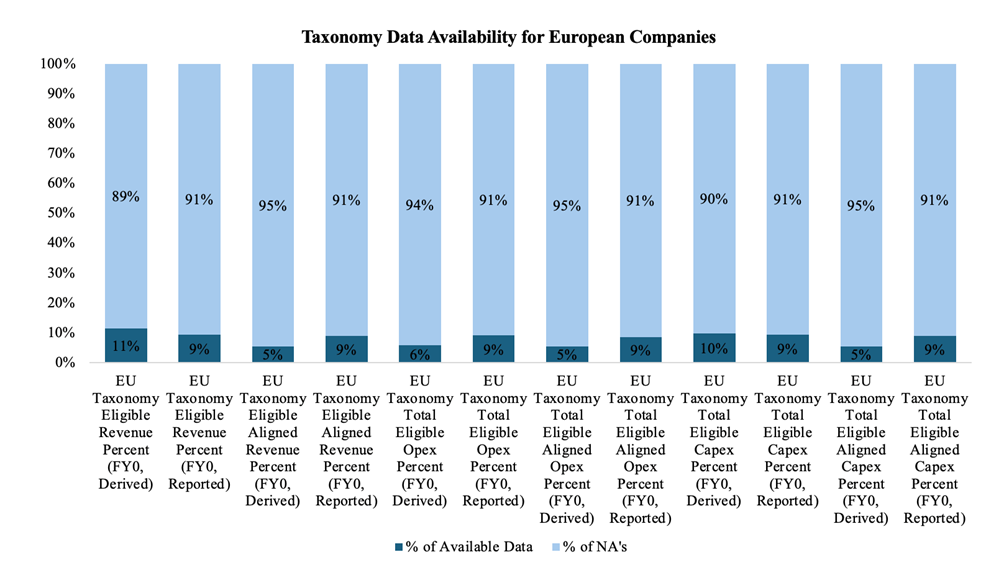
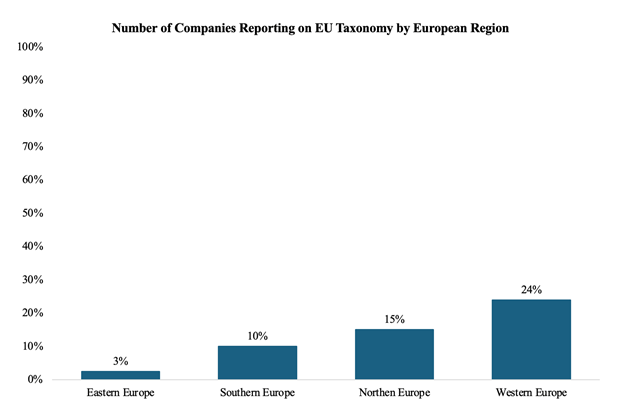
A key challenge in implementing the EU Taxonomy lies in its complex reporting framework.  Companies and financial institutions must assess and disclose the extent to which their activities are eligible and align with the taxonomy’s environmental objectives. Eligibility serves as a foundation for companies to evaluate their activities against the taxonomy and determine whether they fit within its scope. Furthermore, to be considered aligned, activities must contribute substantially to at least one of the six environmental goals outlined in the taxonomy, while also meeting the Do No Significant Harm (DNSH) and Minimum Social Safeguards (MSS) criteria. However, organizations often struggle with understanding these requirements, leading to inconsistencies in reporting (Niewold, 2024; Hofstetter & Babayéguidian, 2024; KPMG International, 2024). Another major hurdle is data availability. Our analysis shows that only a small fraction of European public-listed companies report data relevant to the taxonomy,  with coverage varying from 3% to 24% across different regions. Furthermore, missing data on key indicators, such as taxonomy-aligned revenue, capital expenditures (CapEx), and operating expenditures (OpEx) ranges from 89% to 95%.

These figures highlight the significant gaps that hinder comprehensive assessments of companies’ sustainability performances.

Figure 1: Number of companies (%) that are actively reporting on the EU Taxonomy by European Region

Figure 2:  Data coverage for several EU Taxonomy metrics of public-listed European companies

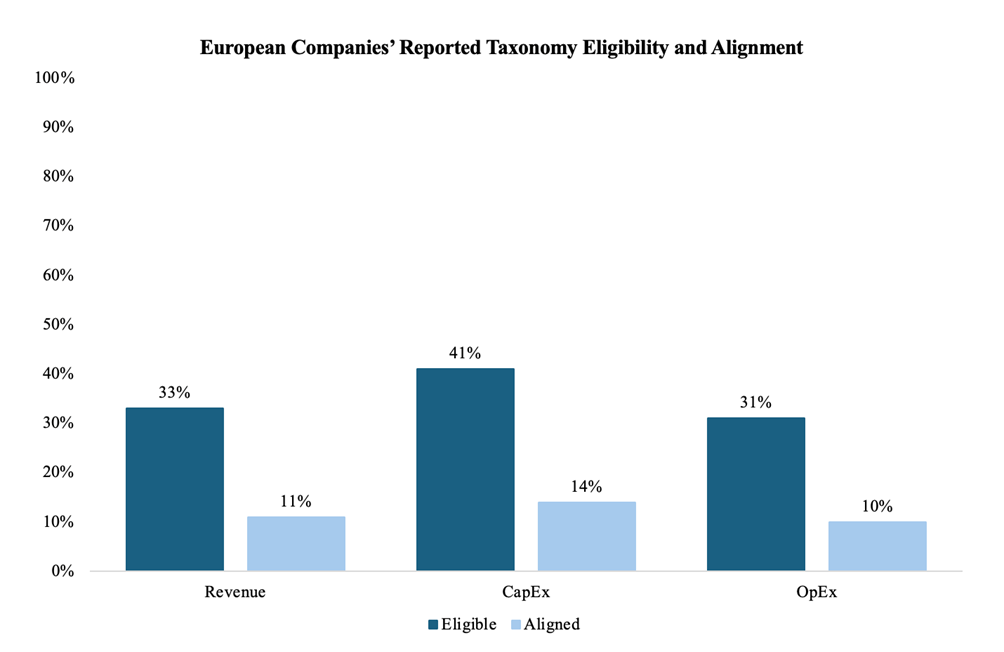
The discrepancy between the share of eligibility and alignment shows that while companies have been able to identify activities within the taxonomy’s scope, alignment levels remain substantially lower with public listed companies in Europe reporting 11%, 14%, and 10% aligned revenue, CapEx, and OpEx, respectively. These figures underscore the difficulties of achieving alignment, even as companies increasingly engage with the taxonomy’s scope and reporting requirements.

Figure 3: Average eligible and aligned revenue, CapEx and OpEx reported by public-listed European companies

Financial Institutions and Article 9 Funds Financial institutions’ occupy a dual role within the EU Taxomomy framework – they are both users and preparers of sustainable disclosures. This dual role makes financial institutions face additional complexity as their own disclosures are dependent on receiving information by other organisations (Garcia-Torea et al., 2024). Current gaps in data availability present challenges for financial institutions in implementing the EU taxonomy in their reporting and investment decisions. Detailed data on specific investments and companies is missing, making it difficult to clearly identify green investments under the taxonomy. There are also large discrepancies in how firms report alignment indicating challenges in implementation and reporting of the taxonomy’s criteria. This makes it difficult to trace financial flows to their direct impacts and to gain a clear overview of how finance connects to real sustainable activities. As a result, proxy indicators and simplified assumptions may be used, not covering the full picture of sustainable investments (Becker et al., 2024). This suggest that financial institutions not only face obstacles in gathering enough data to make informed investment decision but also in obtaining adequate information required for reporting.

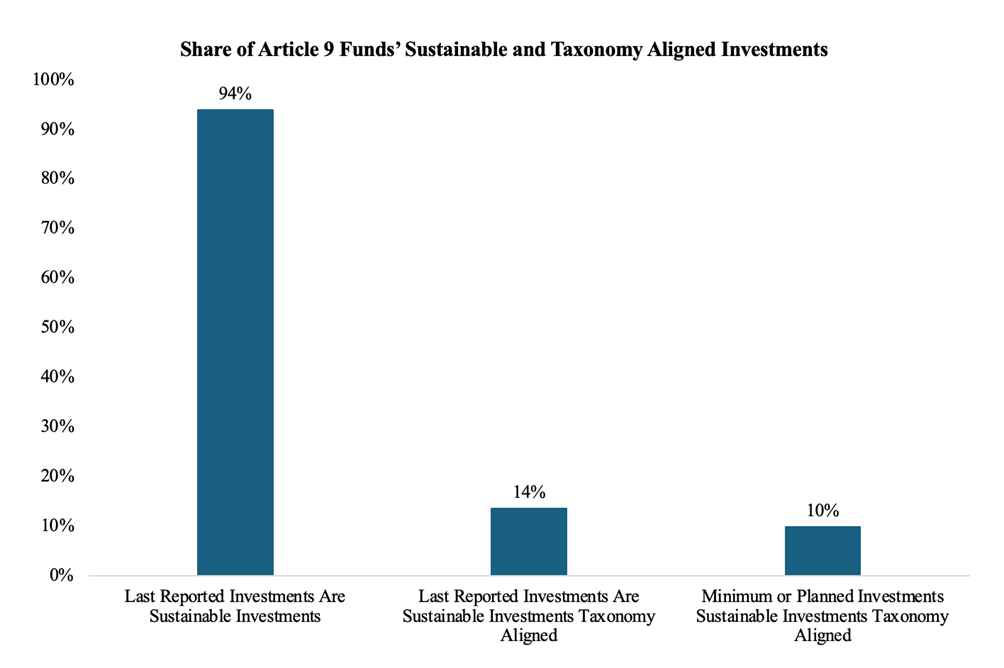
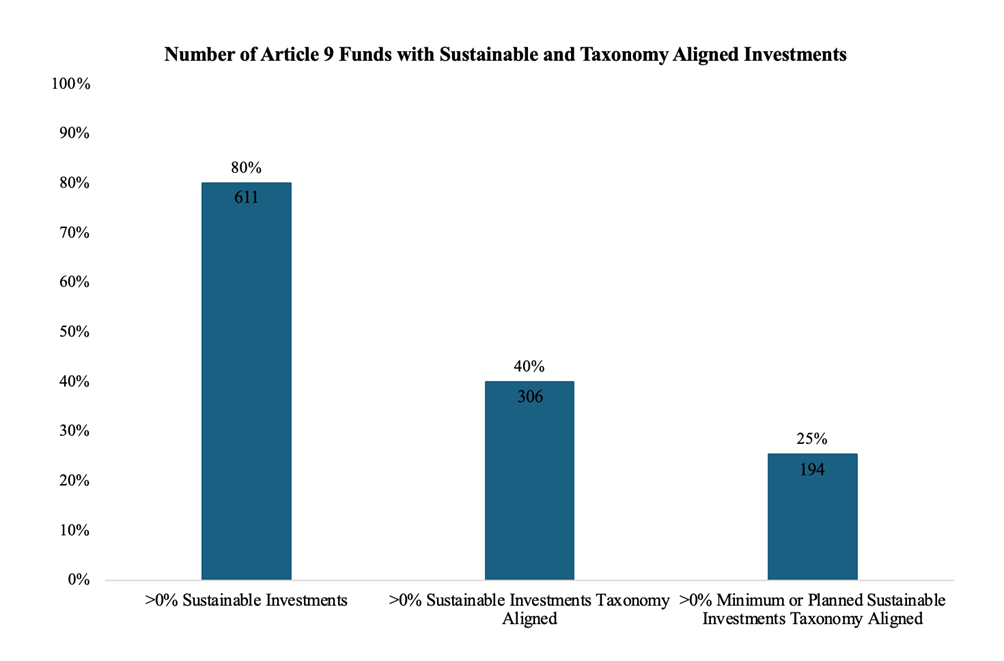
The situation is especially pronounced among Article 9 funds, which are classified under the SFDR as “dark green” and are expected to focus on sustainable investments. In our sample, while 80% of Article 9 funds report having sustainable investments, only 40% report any taxonomy alignment. On average, these funds report 14% of their portfolios as taxonomy-aligned, compared to a 94% share labeled as sustainable. These figures point to the practical limitations of taxonomy-based reporting in its current form, suggesting that the taxonomy may not yet offer a reliable benchmark for sustainability.

Furthermore, only 25% of Article 9 funds have disclosed in their Pre-Contractual Reports their planned or minimum share of taxonomy-aligned investments. The average share of such aligned investments is 10% among these funds. This means that even within the 25% of funds setting a commitment the average share of investments is small. This may be due to funds’ reluctance in committing to thresholds that they might not be able to meet, considering the findings that few funds have investments aligned with the taxonomy and those that do typically have quite small portions of their portfolios in these activities.

Figure 4: Number of Article 9 funds reporting on sustainable, taxonomy-aligned and minimum or planned taxonomy-aligned investments

Figure 5: Article 9 funds’ share of sustainable, taxonomy-aligned and minimum or planned taxonomy-aligned investments

Conclusion: Overcoming Complexity for Effective Implementation

The EU Taxonomy is a powerful tool with the potential to reshape how capital is directed toward sustainable activities. However, its current complexity and data gaps limit its effectiveness. For the taxonomy to fulfill its promise, stakeholders must prioritize streamlining reporting requirements, improving data availability, and setting more realistic expectations for implementation timelines.

Recent policy developments, such as the EU’s omnibus proposal, suggest that reforms are already in motion. Whether these changes will be enough to bridge the gap between intention and impact remains to be seen. As sustainable finance continues to evolve, striking the right balance between ambition and practicality will be essential for meaningful progress.

About the Authors:

Prof. Kristjan Jespersen is an Associate Professor in Sustainable Innovation and Entrepreneurship at the Copenhagen Business School (CBS). Kristjan is an Associate Professor at the Copenhagen Business School (CBS). As a primary area of focus, he studies the growing development and management of Ecosystem Services in developing countries. Within the field, Kristjan focuses his attention on the institutional legitimacy of such initiatives and the overall compensation tools used to ensure compliance. He has a background in International Relations and Economics. 

Alice Almgren and Tove Sellert Pehrsson are completing their Master’s degree in International Business and Politics at Copenhagen Business School (CBS), with a minor in ESG and Sustainable Investments, where this project with London Stock Exchange Group was developed by their team under the guidance of Professor Kristjan Jespersen. Alice works in GN Store Nord’s Strategy and Transformation team, where she supports strategic and commercial projects, including go-to-market plans, channel strategies, and transformation initiatives. Tove works with strategic sustainability consulting at Ramboll Management Consulting, where she supports projects related to ESG strategy, corporate sustainability reporting, and responsible business conduct.

Passionate about sustainability and sustainable finance, Alice and Tove are currently writing their master thesis on the interplay between SFDR and the EU taxonomy and its impact on the reporting and investment decisions of Article 9 funds. Using fund data from LSEG Workspace and interviews with fund managers, their research examines the differences between Article 9 funds that report taxonomy-aligned investments and those that do not. It explores the broader implications of these reporting decisions on ESG-related behaviors and investigates why fund managers may choose to not report on the taxonomy. The goal of the research is to provide insights into how the relationship between SFDR and the EU taxonomy affect the credibility of sustainable investments.

A new way of assessing ocean impacts in investment decisions

kj.msc@cbs.dk · 22/01/2025 ·

By Prof. Kristjan Jespersen, Jakob Moltesen Kristensen, Aske Bonde, Kristian Stub Precht and Rasmus Nautrup Houmøller

As global environmental pressures intensify, the focus on sustainable investments has never been more critical. However, one domain often overlooked in ESG frameworks is the blue economy. While the ocean plays a crucial role in global sustainability the maritime sector faces persistent challenges in data transparency and standardization, limiting its potential for impactful investments. This blog explores insights from a recent study on integrating asset-level data to assess environmental impacts in two key ocean industries: offshore wind and shipping. The findings highlight innovative methodologies and frameworks that could redefine the way in which ESG data is used in the blue economy.

The challenge

Investing in marine industries poses a unique challenge. Shipping and offshore wind is characterized by high complexity in assessing impacts due the complicated nature of the ocean. Here, certain mitigation strategies for one type of impact can be the cause of harm in other areas. It is therefore critical that companies and investors have a foundation from which they can weigh different impacts to minimize the overall harm to the ocean. However, data limitations and a lack of a centralized reporting structure amplify these issues and result in fragmented insights and hindered decision-making for investors. This creates barriers to identifying and scaling sustainability-focused investments. Yet, it also presents opportunities to develop innovative models for environmental impact assessments using highly granular data.

Building an Ocean Impact Framework

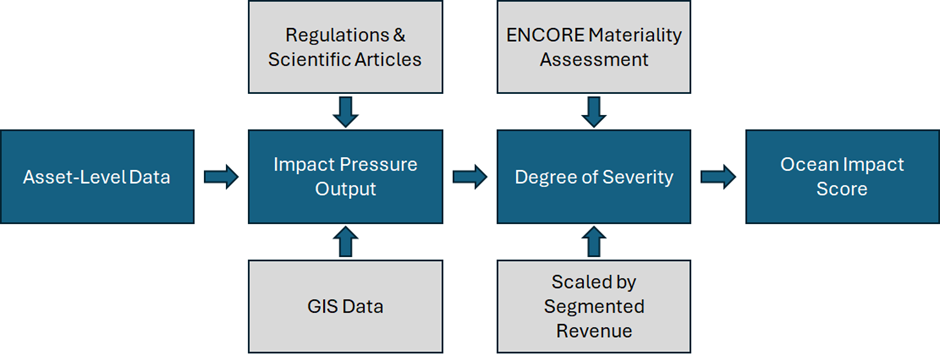
The proposed investment framework addresses these challenges by leveraging granular asset-level data to assess and weigh different types of impact. Such metrics are specific to individual assets within a company’s portfolio and allow for increased measurability. Key features of the framework include:

  • Data categorization: Ownership, location, and technical specifications of assets are integrated to provide a granular understanding of environmental pressures and to correctly assign responsibility.
  • Pressure methodologies: Impact factors such as underwater radiated noise, non-GHG emissions, and whale collisions are modeled to quantify and measure harm.
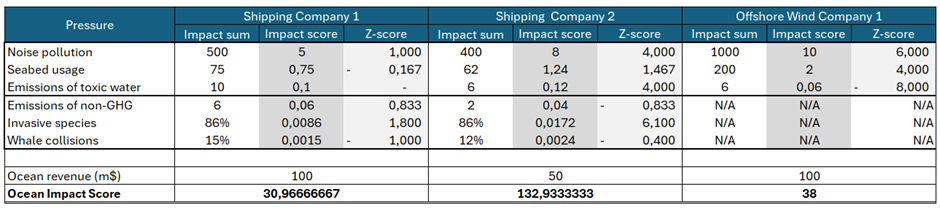
  • Ocean Impact Score: The outputs are consolidated through the use of Z-scores to compare cross-sectoral impacts, enabling investors to measure improvements and identify best-in-class performers which encourages industry-wide progress.

Illustration 1: Roadmap to an Ocean Impact Score.

This framework not only facilitates comparisons between offshore wind and shipping but also aligns with global regulatory standards such as the EU Taxonomy and voluntary initiatives like ENCORE and the TNFD.

A crucial aspect of this framework is its adaptability to existing data limitations. By introducing scaling factors such as segmented revenue, the model accounts for the societal benefits of maritime industries, rewarding companies that reduce their environmental footprint while maintaining output.

Additionally, the incorporation of Geographic Information System data enhances the framework’s ability to measure impacts in sensitive marine areas, such as Marine Protected Areas. This approach ensures that the most vulnerable regions receive priority attention.

Illustration 2: Ocean Impact Score Model. Constructed for illustrative purposes.

Policy and industry recommendations

For meaningful change, collaboration between regulators, industry stakeholders, and investors is essential. Key recommendations include:

  1. Centralized data hubs: Establishing shared platforms for asset-level data can enhance transparency and accessibility.
  2. Collaborative effort: A collaborative effort between stakeholders is essential to develop the necessary tools to establish reliable reporting methodologies within the sector
  3. Enhanced regulation: Introducing thresholds for environmental impacts can drive compliance and innovation.

A call to action for investors

Investors hold a significant responsibility in driving the sustainability transition of the blue economy. By adopting the proposed framework, they can make more informed decisions, prioritize high-impact areas, and actively engage with companies to promote sustainability practices. Investors should focus on rewarding companies for transparent reporting despite potentially high impacts and engage with companies on measurable change parameters. Ultimately, the transition to a more sustainable blue economy requires not only innovative methodologies but also a collective commitment to leveraging data for impact. As the framework evolves, it has the potential to transform ESG investment strategies and pave the way for a more sustainable and healthy ocean.

About the Authors:

Prof. Kristjan Jespersen is an Associate Professor in Sustainable Innovation and Entrepreneurship at the Copenhagen Business School (CBS). Kristjan is an Associate Professor at the Copenhagen Business School (CBS). As a primary area of focus, he studies the growing development and management of Ecosystem Services in developing countries. Within the field, Kristjan focuses his attention on the institutional legitimacy of such initiatives and the overall compensation tools used to ensure compliance. He has a background in International Relations and Economics. 

Jakob Moltesen Kristensen is an MSc Finance and Strategic Management student at Copenhagen Business School, with professional experience in financial analysis and organizational transformation. Jakob has previously conducted a research project on polyethylene in consumer products and is passionate about ESG-focused initiatives and has completed a minor in ESG Metrics and Sustainable Investments.

Aske Bonde is a Business Analyst at a Nordic consulting company and an MSc Finance and Strategic Management student at Copenhagen Business School, where he also completed a Minor in ESG Metrics and Sustainable Investments. Aske is passionate about creating innovative solutions at the intersection of sustainability, business, and technology.

Kristian Stub Precht is a graduate student at Copenhagen Business School majoring in Finance and Strategic Management with a minor in ESG Metrics and Sustainable Investments. His academic interests lie in sustainable corporate investments, particularly from an asset management and business expansion perspective. He is currently employed as an M&A Consultant at a medium-sized third-party logistics provider. In his spare time, Kristian unwinds through activities like golf, hiking or video games.

Rasmus Nautrup Houmøller is a graduate student pursuing a Master’s in Finance and Strategic Management at Copenhagen Business School, with a minor in ESG Metrics and Sustainable Investments. Currently, he is a Junior Analyst at a Nordic-based investment manager with upcoming employment as a Financial Consultant. His academic interests and passion lie at the intersection of ESG, portfolio- and risk management. Outside his studies, he finds enjoyment in physical activities, cooking, and reading different kinds of literature.

US Climate Policy Shifts: Implications of the 2024 Elections for the US Technology and Cyclical Consumer Goods Sectors

kj.msc@cbs.dk · 10/01/2025 ·

By Prof. Kristjan Jespersen, Ella Alette Jakobsen, Anna Sophia Burri, Oda Solend and Constantin Zeithammer

The 2024 US election took place against the backdrop of global climate talks at COP29, with the US playing a pivotal role in international climate action. The election represents a make-or-break moment for US climate ambitions: a continuation of climate commitments under Harris, or a rollback of policies such as the Inflation Reduction Act (IRA) under Trump. Since the IRA was enacted in 2022, investments in clean technology and infrastructure have totaled USD 493 billion, a 71% increase compared over pre-IRA levels (Rhodium Group, 2024). For institutional investors, such as asset managers, understanding the impact of the election on US climate policy in general, and the IRA in particular, is critical to asset management decision-making.

This blog examines the results of our research, on whether and how a Democratic victory would have changed the regulatory climate landscape, and the impact of three election outcome scenarios (retained, repealed, or partially repealed IRA) on the technology and consumer goods sectors. The focus was on the technology sector and the cyclical consumer goods sectors as these are among the industries most affected by the IRA. Our research focused on two companies within each sector, to illustrate how companies are affected differently by the IRA, depending on their core manufacturing activities. The impact of three election outcome scenarios was assessed for Marvell Technology (semiconductor solutions), QuantumScape  (solid-state lithium battery production for EVs), Ford (leading automotive manufacturer), and Nike (global leader in consumer sports products). 

Main Findings

1. A Democratic victory will lead to a continuation of current US climate policy and the IRA

The Democratic Party has prioritized the climate crisis as a major policy issue and will therefore emphasize continued climate regulation, centered on the key piece of legislation, the IRA. Despite the lack of clear climate action in public statements, Democratic candidate Harris emphasized the urgency of climate change and was expected to support the continuation of climate-related policies such as the IRA. Vice-presidential candidate Walz has a strong history of climate action and was seen as the climate pick among the running mates. 

2. The key US climate policy tool of the US, the IRA, will be adjusted rather than repealed entirely

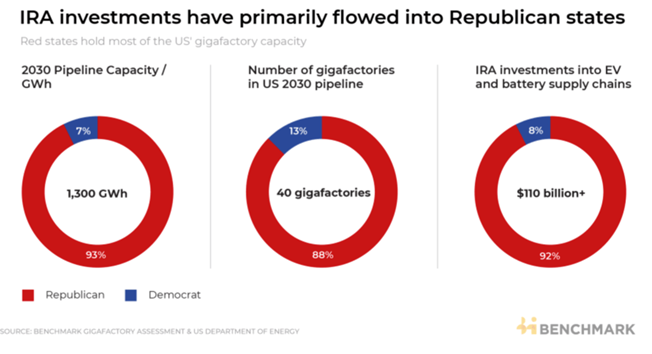
Our analysis further supports the argument that the IRA is likely to be adjusted rather than repealed. This is due to the strong bipartisan and governmental support for the policy, but also due to the fact that IRA investments in clean technologies, such as EV battery manufacturing, have largely gone to Republican states. A potential repeal of the IRA is countered by market dynamics, cost reductions in clean technology, job creation in Republican and Democratic states, and competition with China, a key policy objective for any future administration. The sticky nature of policies already implemented, projects and investments made, and benefits realized creates path dependencies that make a full repeal of the IRA-related investment incentives less attractive to a Republican administration. Moreover, the mismatch between Trump’s policy rhetoric and reality argues against a complete reversal of US climate policy ambitions. During the last Republican presidency, more onshore wind capacity was installed under Trump than under Biden.

Source: Benchmark Source, 2024

3. A partial repeal of the IRA will have a significant but uneven impact on US core industries

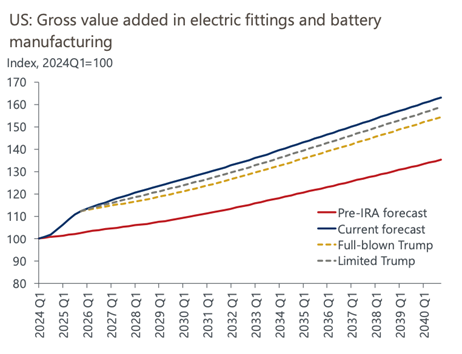
Looking at the US technology and cyclical consumer goods sectors, a partial repeal of the IRA will have a significant but uneven impact on companies. In the technology sector, the withdrawal of investment incentives such as the clean energy or EV tax credits would have a major impact on the growing cleantech industry. This effect would spill over to related technology sectors, particularly battery manufacturing and semiconductor technology which face slower investment growth rates. However, due to their geopolitical importance for national security, supply chain stability, and technological leadership, some cleantech and semiconductor companies are expected to remain a top priority for policymakers and continue their upward trajectory regardless of the election outcome. In the cyclical consumer goods sector, EV manufacturers such as Ford rely heavily on IRA tax credits to support their long-term strategies. The repeal of these credits would reduce competitiveness, although potentially increased fossil fuel production could boost ICE sales. The retail sector is less affected, although ongoing ESG reporting would marginally increase costs.

Source: Oxford Economics/Haver Analytics, 2024

Recommendations for asset managers

First, asset managers should prioritize US investments in industries that enjoy bipartisan and government support, such as companies developing semiconductor technology while reducing exposure to cleantech subsectors that are vulnerable to electoral fluctuations, such as EVs and related battery manufacturing. Second, our analysis suggests prioritizing publicly traded companies in the US technology sector, as they have proven resilient to fluctuations in the climate policy regulatory landscape. Such companies are less vulnerable to a lack of bipartisan support, as well as a rollback of industrial policy or IRA investment incentives.

Asset managers can reduce their portfolios’ exposure to US policy changes by expanding investments in regions with more stable climate frameworks, such as the EU (EU Green Deal) renewable energy initiatives in Southeast Asia.

About the Authors:

Prof. Kristjan Jespersen is an Associate Professor in Sustainable Innovation and Entrepreneurship at the Copenhagen Business School (CBS). Kristjan is an Associate Professor at the Copenhagen Business School (CBS). As a primary area of focus, he studies the growing development and management of Ecosystem Services in developing countries. Within the field, Kristjan focuses his attention on the institutional legitimacy of such initiatives and the overall compensation tools used to ensure compliance. He has a background in International Relations and Economics. 

Oda Solend works as a student assistant at Novo Nordisk, supporting a program designed to stimulate innovation in the life science ecosystem by sharing valuable knowledge and expertise with start-ups and academia. She is completing her Master’s degree in International Business and Politics at Copenhagen Business School (CBS), with a minor in ESG, where this project with Nordea Asset Management was developed by her team under the guidance of Professor Kristjan Jespersen. Oda also volunteers with femella, a network organisation empowering female students and young professionals in career and personal growth. She is currently preparing her Master’s thesis on green investments and political risks.

Constantin Zeithammer works as a student assistant in Export Compliance at A. P. Møller-Mærsk and is about to complete his Master’s degree in International Business and Politics at CBS. He holds two Bachelor degrees in Philosophy & Economics from the University of Bayreuth and in Politics, Philosophy & Economics from Charles University in Prague. Previously, Constantin worked in international cooperation for sustainable development at GIZ and in consulting at PwC. His main research interest is the green transition of the automotive industry and related challenges from a political economy perspective, including both market and non-market approaches. Constantin also has a minor in ESG and Sustainable Investments, during which he had the opportunity to develop this project with the team,  Professor Kristjan Jespersen, and Nordea Asset Management.


Rethinking the Future: Digital Technologies Powering the Circular Economy

kj.msc@cbs.dk · 10/01/2025 ·

By Prof. Kristjan Jespersen and Kate Jennifer Ting

The urgent need to address the environmental and economic challenges posed by the traditional “take-make-dispose” economic model has never been clearer. Global resource depletion, waste generation, and biodiversity loss demand a transformative shift in how societies and businesses operate. The circular economy (CE) presents a promising alternative, aiming to minimize waste, optimize resource use, and extend product lifecycles. However, transitioning to this model is complex and requires innovative solutions. Digital technologies emerge as pivotal enablers in driving this transition, providing tools that can facilitate the implementation of circular strategies across industries.

At the heart of the transformation is the integration of digital tools—such as the Internet of Things (IoT), artificial intelligence (AI), and blockchain—into circular business models. These technologies enable companies to innovate across product design, manufacturing, usage, and end-of-life stages, ensuring materials are reused, recycled, or repurposed rather than discarded. Understanding how businesses adopt and implement these technologies offers valuable insights into the potential and limitations of digital-enabled circularity.

Understanding the Landscape: Methodological Insights

To explore the intersection of digital technologies and the circular economy, research was conducted with Danish companies actively collaborating with technology and consultancy providers. An interpretivist and exploratory approach was employed, incorporating qualitative and quantitative methods. Semi-structured interviews provided a detailed understanding of the drivers, challenges, and impacts of digital technology on CE implementation.

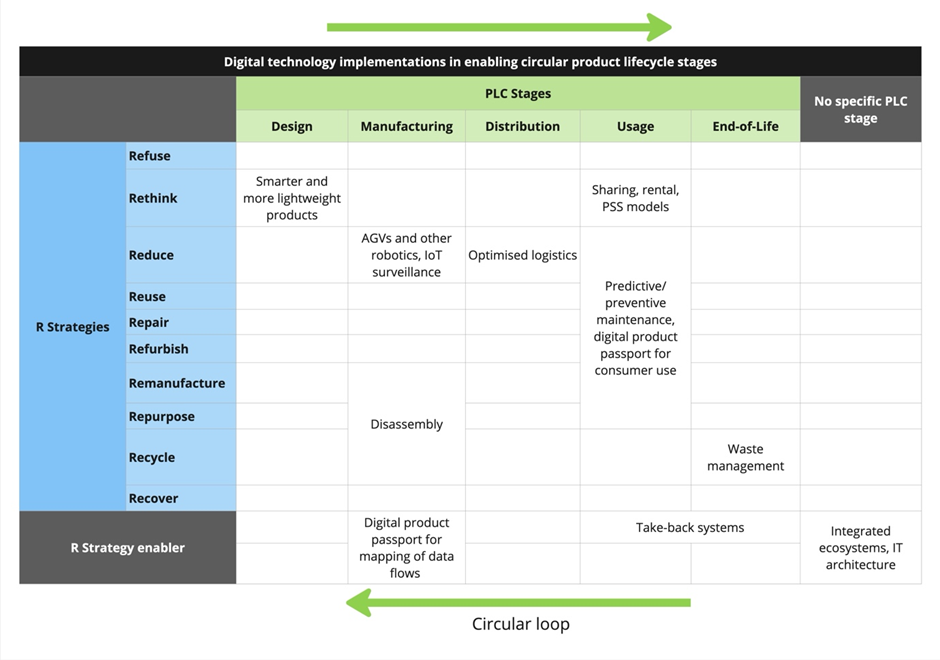
The analysis was guided by frameworks such as the 9R strategies (Refuse, Rethink, Reduce, Reuse, etc.) and Product Life Cycle (PLC) stages, offering a structured lens to evaluate digital interventions. These frameworks enabled the identification of patterns and best practices, while theoretical perspectives such as the Natural Resource-Based View (NRBV) and Organizational Information Processing Theory (OIPT) provided deeper context on resource utilization and information management.

Key Findings

1. Bridging Awareness and Action

The study revealed that Danish companies exhibit varying levels of awareness and adoption of circular strategies. While recycling and remanufacturing are commonly implemented, strategies like rethinking and reducing—critical for early-stage interventions—are less prevalent. Awareness is highest in sectors with strong regulatory frameworks and consumer demand for sustainability, highlighting the role of external pressures in driving adoption.

2. Digital Technologies as the Game Changer

Digital technologies were found to be instrumental in supporting CE strategies across all stages of the product lifecycle. Key examples include:

  • IoT: Enabled real-time tracking of materials, improving logistics and facilitating reuse and remanufacturing efforts.
  • AI: Optimized resource allocation through predictive analytics, enhancing operational efficiency and decision-making.
  • Blockchain: Enhanced transparency and traceability within supply chains, ensuring compliance with CE principles and reducing inefficiencies.
  • Digital Product Passports (DPPs): Provided critical data on product composition and lifecycle, aiding recycling, repair, and remanufacturing effort and therefore supports a wide array of circular strategies across several product lifecycle stages.

These technologies demonstrate significant potential in addressing key challenges related to circular economy (CE) implementation, such as material traceability, data fragmentation, and the creation of collaborative ecosystems. The table below summarizes the most common applications of digital capabilities found in enabling circular strategies:

3. Drivers and Challenges

The study identified several drivers that encourage the adoption of digital-enabled CE models:

  • Regulatory frameworks: Policies such as the EU’s Circular Economy Action Plan and Corporate Sustainability Reporting Directive incentivize businesses to embrace sustainability.
  • Consumer demand: Increasingly, customers value and prefer sustainable products, pushing companies to innovate.
  • Internal motivations: Cost savings, risk mitigation, and brand differentiation also play a role.

However, several barriers hinder progress:

  • High implementation costs: The initial investments required for digital infrastructure, particularly for SMEs, remain a significant hurdle.
  • Cultural resistance: Organizational inertia and lack of awareness often impede the transition to CE models.
  • Fragmented data systems: Siloed and non-interoperable digital platforms limit the seamless integration of CE strategies.

4. Innovating Business Models

The research highlighted how digital technologies are enabling the shift to innovative business models such as Product-as-a-Service (PaaS). These models emphasize extending product lifecycles through rental, repair, and refurbishment services, reducing waste and creating new revenue streams. For example, take-back systems supported by IoT and blockchain have become effective tools for ensuring products re-enter the value chain.

Companies adopting these models report enhanced customer engagement, streamlined operations, and alignment with sustainability goals. However, scaling these efforts requires significant collaboration across value chains and alignment with broader regulatory and market trends.

Implications and Future Directions

The findings underscore the critical role of digital tools in advancing CE goals but also highlight the systemic challenges that need to be addressed. Collaborative ecosystems—spanning suppliers, technology providers, and regulators—are essential for achieving seamless integration of circular strategies. Building trust, transparency, and interoperability within these ecosystems is key.

Moreover, fostering a cultural shift within organizations is crucial. Leadership must prioritize sustainability as a strategic objective, embedding CE principles into core business practices. Investing in talent and fostering a data-driven culture are equally important for leveraging the full potential of digital technologies.

Scaling these efforts will also require targeted support for smaller enterprises, which often lack the financial and technical resources to implement CE strategies. Policymakers can play a pivotal role by providing incentives, reducing barriers to technology adoption, and fostering public-private partnerships.

Conclusion: Turning Potential into Reality

The integration of digital technologies into circular economy strategies offers a path toward sustainable and resilient business practices. By addressing existing barriers and fostering innovation, companies can transition from linear to circular models, achieving both environmental and economic benefits. The experiences of Danish companies provide a valuable roadmap for others, illustrating the transformative potential of digital-enabled circularity. As the urgency for sustainable solutions grows, the EU stands as a model for leading this global transformation.

About the Authors:

Prof. Kristjan Jespersen is an Associate Professor in Sustainable Innovation and Entrepreneurship at the Copenhagen Business School (CBS). Kristjan is an Associate Professor at the Copenhagen Business School (CBS). As a primary area of focus, he studies the growing development and management of Ecosystem Services in developing countries. Within the field, Kristjan focuses his attention on the institutional legitimacy of such initiatives and the overall compensation tools used to ensure compliance. He has a background in International Relations and Economics. 

  • « Go to Previous Page
  • Page 1
  • Page 2
  • Page 3
  • Page 4
  • Page 5
  • Page 6
  • Interim pages omitted …
  • Page 9
  • Go to Next Page »

Copyright © 2026 · Copenhagen Business School

  • Accessibility Statement
  • Privacy Policy
  • Cookie